

The Inextricable Link Between Geopolitics, Security and Humanitarian Impact

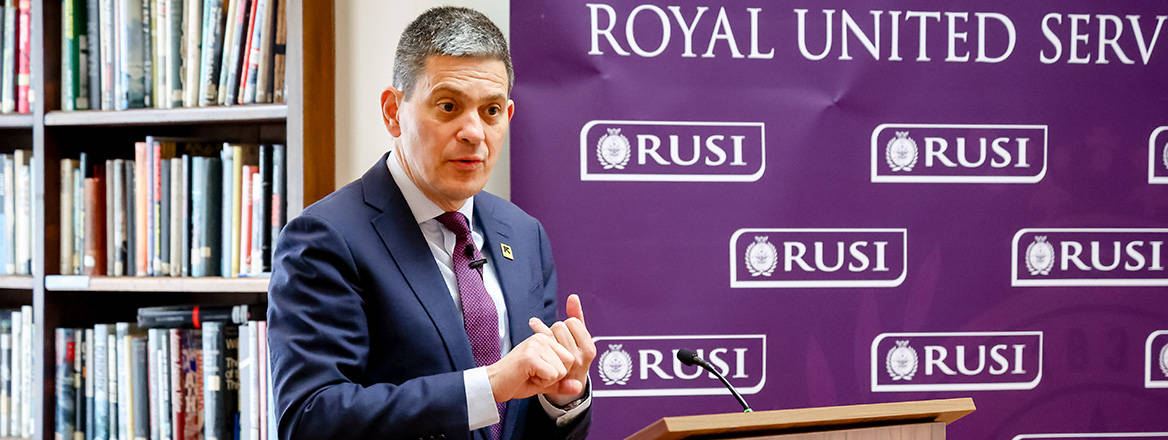
As big as the change at the end of the Cold War, the current 'hinge moment' is different in its complexities, discusses former UK Foreign Secretary David Miliband.
I am often asked about the difference between being Foreign Secretary and leading a humanitarian organisation. The truth is that in government, you are constantly confronted by the big picture. But the danger is that you lose sight of the people. In an NGO, you are confronted every day by the people you serve. But the danger is that you can lose sight of the big picture. Amid ongoing debates over the role, scope and impact of aid, we have to acknowledge both the macro and micro, the geopolitical shifts reshaping the world and the clients of organisations like the International Rescue Committee (IRC) who live at the sharp end of any policy decision.
A Hinge Moment
This is a hinge moment in international affairs. A moment at least as big as the end of the Cold War in 1989/90. The geopolitical order is changing in fundamental ways.
First, multi-alignment. The world is moving away from a system dominated by a small number of powers toward a far more multi-aligned order with many more centres of influence. In the early 1990s, the G7 accounted for more than half of global GDP at purchasing power parity. Today it represents roughly a quarter of the world economy. Economic, political and technological power have all dispersed.
Countries no longer line up neatly behind a single hegemon or bloc, or even two. Governments are balancing relationships, hedging risks and aligning issue-by-issue. Regional powers exercise greater influence. Middle powers possess greater strategic flexibility. State and non-state actors can wield disproportionate influence. The superpowers are super-powerful, but they do not always get their way. And sometimes they get in their own way.
For humanitarians, the consequences are severe. Countries already in conflict, like Sudan, become arenas for regional competition, with outside powers fuelling and prolonging the violence. At the same time, the international consensus – that once set a benchmark for protection of civilians or humanitarian access – has weakened. Diplomatic coordination has frayed as well, making it harder to build the political pathways needed for peace.
Second, the role of the US as the anchor of the international system has changed fundamentally. The period after the Second World War was remarkable for several reasons. A Cold War with the hot threat of nuclear annihilation was unprecedented. But there was something else. The US, as the most powerful country in the world, made lots of mistakes. But it anchored the global system not just as the reserve currency, but as the largest aid donor, a diplomatic force all over the world, an indispensable power.
This is a world where leverage and share, not grandeur and size, is everything. If you control chip manufacture, or rare earths, or fertiliser flows, you have power. It is hard power even when it is not military power
That role was born of the experience of two generations of Americans in world wars not of their making, and a failed peace in the inter-war period that was a harsh teacher. President Truman said at the San Francisco conference in 1945 that its job was to show that ‘right makes might’. The US was not always a benign hegemon, but when it came to the structures of international power, it was an anchor.
That has now changed. It has withdrawn from international agreements and institutions, from the Paris Climate Agreement to the World Health Organization. Its national security strategy criticises Europe more than Russia. And for humanitarian organisations like the IRC, we see it most directly in the extraordinary cuts to foreign assistance. US funding for humanitarian aid dropped from $14 billion in 2024 to $4 billion in 2025. Charles Kenny estimates that over a million could have lost their lives in 2025 due to US cuts to health and humanitarian programmes. Those cuts were followed by the UK and other countries in Europe slashing their aid budgets.
Third, we are living in a hyperconnected world. That means local risks are global risks. Monetary tightening in Washington or London can trigger debt distress across the developing world. Pandemics cross borders rapidly. Refugee flows can destabilise neighbouring regions. Regional wars quickly become global economic events. And climate shocks compound every one of these pressures.
When Russia invaded Ukraine, 47 million people across Africa, Asia and Latin America struggled to find food and were pushed into states of severe hunger due to disruption in grain flows.
Fourth, power is increasingly asymmetric. We saw this on 9/11. We continue to see it around the world.
This is a world where leverage and share, not grandeur and size, is everything. If you control chip manufacture, or rare earths, or fertiliser flows, you have power. It is hard power even when it is not military power.
The Iran War
The Iran war exemplifies and intensifies many of these trends.
The conflict has demonstrated how power now operates in a connected, asymmetric world. Chokepoints and pressure-points create power that ripples across the global economy. Regional states, non-state actors, maritime bottlenecks, energy markets and supply chains all shape the trajectory and consequences of the war more than military power.

Stay up to date with the latest publications and events from the Terrorism and Conflict Research Group

The conflict has also exposed widening strategic divisions across the Atlantic, in many respects greater than those seen during the Iraq War. Disagreements and discussions extended beyond military tactics to broader questions about international law, escalation, economic risk and the management of global order itself.
Little attention has focused on the forgotten front of the humanitarian consequences. In an interconnected global economy, disruption propagates outward through shipping routes, energy markets, fertiliser supply chains and food systems. The effects travel fastest to fragile states already living close to the edge.
The World Food Programme has warned that if the conflict continues through June, another 45 million people could face acute food insecurity, surpassing even the levels seen after Russia’s invasion of Ukraine.
The IRC saw the effects directly across many of the countries where we operate. In Yemen, shipping insurance premiums surged by 400% and imported goods rose sharply in price. In Somalia, clinics rationed therapeutic food for severely malnourished children because supply chains had broken down. In Sudan, emergency humanitarian supplies previously routed through Dubai had to be rerouted at far greater cost. Afghanistan saw the cost of imported goods triple as aid agencies lost access to direct transit routes through Iran.
The asymmetry in funding the war versus aid has also been striking. The Pentagon estimated the military costs of the war at $25 billion after nine weeks. The humanitarian response from the US totalled just $49 million, or 0.2%.
That imbalance tells us something important about the modern international system. Governments still mobilise rapidly for military confrontation. They struggle far more to mobilise against the cascading humanitarian consequences that increasingly define modern conflict, and rarely do they spend on the shock absorbers to mitigate them.
IRC’s Work
This is where IRC works. The geographies most impoverished by the emerging world disorder.
Extreme poverty is increasingly concentrated in these fragile and conflict-affected states. Climate vulnerability and conflict increasingly overlap. More than 120 million people are forcibly displaced globally. More than 240 million people require humanitarian assistance. In many parts of the world, conflict and fragility are becoming the defining condition in which development, governance and security policy operate.
It requires a new form of humanitarian diplomacy. My colleagues increasingly find themselves negotiating access across frontlines, navigating fragmented power structures, working around sanctions regimes and helping hold together forms of practical international cooperation even as broader geopolitical consensus weakens. For them, the challenge is greater, the need more severe and the cost more extreme.
The real question is how dire will the consequences of a world with weaker rules, weaker institutions and weaker forms of cooperation become before governments recognise the costs of allowing disorder to spread unchecked.
The Foreign and Commonwealth Development Office, alongside South Africa, British International Investment and the Children’s Investment Fund Foundation, recently convened a conference to discuss new partnerships for international development. From our point of view, the point of view of the clients we serve, the key points are: focus grant aid on fragile states, make sure that aid is directed towards proven and cost-effective programmes, empower civil society alongside government, and recognise that if a new development bargain neglects the debt mountain facing developing countries, no amount of aid will do the trick.
UK as a Middle Power
I have made clear my view of the UK aid cuts. But the challenge facing the UK extends far beyond humanitarian action alone. The central strategic question for Britain today, like Canada, Germany, Japan and others, is how to exercise agency in a more fluid and fragmented international order. Not by replacing the US, nor seeking divorce, but by becoming more capable partners, more effective organisers of collective action and stronger regional anchors in their own right.
Much attention focused on Mark Carney’s speech at Davos earlier this year. His remarks several weeks later struck me as equally important. He said that he wakes up every morning asking, ‘What can Canada do?’, not ‘What has Donald Trump tweeted?’
That instinct captures the right mindset for middle powers in this emerging era. Less reactive. More strategic. More willing to shape outcomes rather than simply respond to them.
The experience of Ukraine over the last eighteen months demonstrates what is possible. Transatlantic cooperation remains a vital aim. But European states, alongside partners like Canada, have shown that they can step up through coordinated sanctions, defence industrial support, refugee protection, financial assistance and diplomatic leadership when they act collectively and with purpose.
The insight at the heart of the UK Strategic Defence Review is correct: British security increasingly depends on a stronger European pillar within NATO, one capable of greater coordination, resilience and strategic initiative while remaining firmly anchored in the transatlantic alliance.
The broader lesson extends well beyond military security. Coalitions of the willing and capable states can still shape outcomes in a fragmented world, particularly in areas where governance gaps are widening and where no single power can lead alone.
We will need institutional imagination to achieve the critical mass, reliance, and dynamism necessary for the modern world
That applies to climate and economic policy, where middle powers will increasingly need to build partnerships around low-carbon growth, resilient supply chains and clean-energy trade, not simply as environmental policy, but as economic and geopolitical strategy. The countries able to align decarbonisation with competitiveness and energy security will help shape the next phase of globalisation.
It applies to aid policy. Last year Canada, Japan, South Korea, the UK, the EU and its member states contributed $131 billion in aid, 75% of total Overseas Development Aid (ODA). All shared the intention to support those most in need, but funding too often flowed through small, fragmented projects that reduced efficiency and diluted impact. Latest available data shows that only 25% of ODA reached fragile and conflict-affected states, where each dollar can have the greatest effect. By pooling resources and aligning priorities, these donors could reduce duplication, share risk, and sustain engagement even in the most constrained environments.
It applies equally to global health, artificial intelligence and humanitarian response, where practical cooperation matters more than rhetorical consensus. And it applies to the defence of international law and international humanitarian law.
I have no doubt that Britian’s security and prosperity depend on a much stronger, institutional relationship with the rest of Europe. A ‘reversal’ of Brexit is not possible because the deal we had is not available, and the EU is itself developing new structures, not least to accommodate Ukraine. We will need institutional imagination to achieve the critical mass, reliance, and dynamism necessary for the modern world.
This period of geopolitical fragmentation has eroded the norms that underpin international order, from civilian protection and humanitarian access to technological governance. In that environment, middle powers have both a strategic interest and a particular responsibility to uphold the rules that constrain impunity, reduce instability and preserve space for cooperation.
Britain has always needed allies. We need them more than ever. Because only with them can we uphold the rules, norms and cooperation on which we all depend.
© David Miliband, 2026, published by RUSI with permission of the author.
The views expressed in this Commentary are the author's, and do not represent those of RUSI or any other institution.
For terms of use, see Website Terms and Conditions of Use.
Have an idea for a Commentary you'd like to write for us? Send a short pitch to commentaries@rusi.org and we'll get back to you if it fits into our research interests. View full guidelines for contributors.
Related event
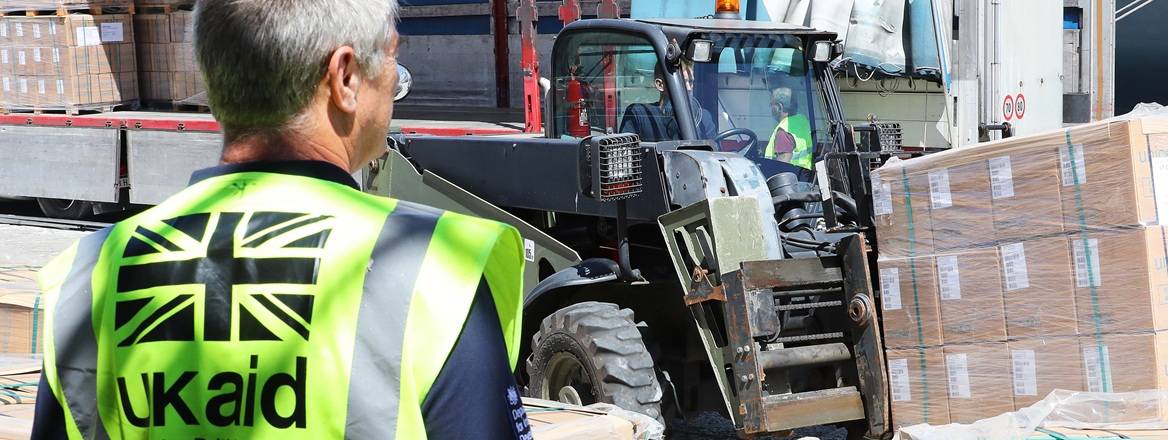
Exploring how aid cuts and shifting global influence affect UK security, stability, and development policy, with a focus on fragile states in Sub-Saharan Africa.
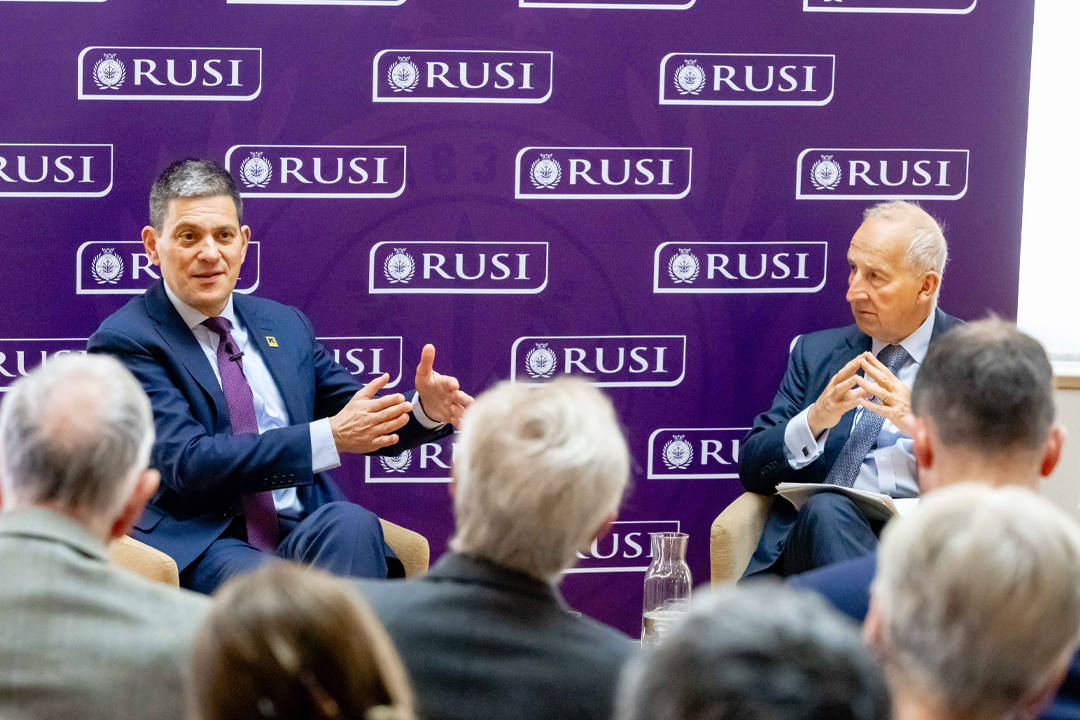
WRITTEN BY
David Miliband
President and CEO, International Rescue Committee
- Jim McLeanMedia Relations Manager+44 (0)7917 373 069JimMc@rusi.org