

In Helping Ukraine, We Protect Ourselves

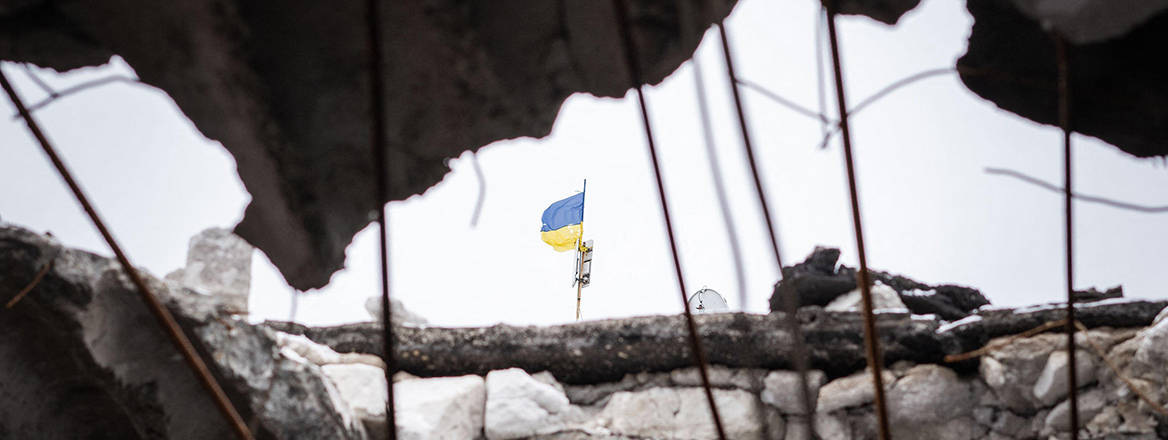
Supporting Ukraine is self-interest, not charity: Russia threatens democracies well beyond Europe, and Ukraine’s battlefield innovation and civilian resilience hold lessons for the West.
Your authors have just returned from a 10-day visit to Ukraine, with meetings in Lviv, Kyiv, Kharkiv and Dnipro. We met extraordinary innovators at drone factories and visited war-weary but motivated soldiers close to the kill-zone. We heard from NGOs, media outlets and common citizens, all of whom shared a basic message: they will not break us.
As Ukrainians face a fifth winter of war, anticipating severe power and heating shortages due to Russian attacks on energy infrastructure (now including petrol stations), their ongoing resilience is remarkable. This is even more impressive when we are reminded of the numerous and brutal Russian human rights transgressions since the start: the murder of civilians in Bucha and Izyum, the torture and deaths of prisoners of war, the abduction and exfiltration of children into Russia. The indiscriminate attacks against civilians – with ballistic missiles, glide-bombs and drones – all ensure that nowhere feels safe, a deliberate tactic in the Russian government’s ‘cognitive warfare’ campaign.
Casualties are mounting, with as many as 250,000-300,000 killed and wounded on the Ukrainian side and over five times this number on the Russian. Though defiant, Ukrainians are also understandably exhausted. Today, some of Ukraine’s staunchest allies are also experiencing fatigue, with increased pressure back home due to high energy costs, inflation and strained social services. Far-right parties in Europe, many cosy with Russia, are surging in the polls in countries that have been major supporters of Ukraine, including Germany and France. Public backing is already weaker across southern Europe, where governments and citizens have to contend with security threats to their south in addition to the threat posed by Russia.
In today’s transactional, realpolitik world, many governments and their citizens are asking why they should keep sending billions of dollars to Ukraine. What is in it for us? It is a fair question and one that demands greater public debate about the merits of continued support to Ukraine.
This question has two distinct answers.
A Threat to All Our Democracies
The first is that Russia poses a threat not just to its immediate neighbours, but to all our democracies. Indeed, over the last decade, Russia has been conducting grey-area, subthreshold attacks against most NATO Allies. This includes – but is not limited to – cyberattacks on critical infrastructure; drone incursions at airports; interference with undersea cables (which we rely on for financial transactions, energy and internet connectivity); arson attacks on warehouses; the murder/attempted murder of Russians abroad – even with chemical weapons; the weaponisation of migrants; shadowing of NATO vessels; and disinformation campaigns and election interference.
Ukraine’s incredible advances in drone technology and innovations on the battlefield are well known. The country’s military is now the most advanced and practised in Europe, and they are ready to share their accumulated wisdom and experience with us
These hybrid attacks all fall below the threshold that would require a kinetic response, and have only increased in pace and reach over the last year. It is only a matter of time until one of these triggers a response above the threshold. In today’s more mercantilist geopolitical framework, where countries have interests before friends, relying on a willing Ukrainian military to confront the Russians with Western treasure is cheaper than having to invest Western blood.
We should take Putin at his word: the threat to European security is real. He has made clear his objectives. In 2024, in an address to the Federal Assembly of Russia, he stated he was seeking to create 'a new equal and indivisible security framework in Eurasia'.
This new framework would be Eurasian in nature, lean towards the BRICS in which leadership would come, of course, from Russia. Putin added: 'I would like to reiterate (I think this is important for everyone) that no enduring international order is possible without a strong and sovereign Russia.' In other words, the security of Ukraine would ultimately be guaranteed by its aggressor, Russia.
But the same goes for other European countries. Russia would hold a veto power over decisions by countries it considers under its sphere of influence. Those countries would no longer be free to choose their allies, their political model or even the core values of their societies, without first receiving authorisation from Moscow. This is closest to the control imposed on African countries under colonialism.
This makes, for example, Europe’s withholding of old Patriot stocks from Ukraine an act of self-harm. Any attempt to sell (rather than donate) them to Ukraine makes it an act of selfishness and short-sightedness at best, extortion at worst.
Beyond Europe
The impacts of this war do not, however, stop at Europe.
Africa in particular has faced a different type of threat from Russia. While there is evidence of Russian involvement in election malfeasance, not least in South Africa and Zambia, the presence of its mercenaries in propping up regimes across the Sahel can only amplify the underlying problems of governance and exclusion. Presumably Moscow accrues added benefit when migrants become weaponised as a result.
The second reason to support Ukraine, even more apparent on this recent visit, is that we can all learn from Ukraine, on both the military and civilian sides. Ukraine’s incredible advances in drone technology and innovations on the battlefield are well known. The country’s military is now the most advanced and practised in Europe, and they are ready to share their accumulated wisdom and experience with us.

Ukraine’s lesson is less in cutting-edge invention than innovation and most importantly in expediting implementation at much lower costs than their counterparts in Western Europe and North America. The existential nature of its struggle has removed many – but not all – of the frictions in the system of arms procurement, especially as younger generations prefer this newer market and the governance it offers over the Soviet, centralised model.
But it is especially among the soldiers on the frontline that this spirit of resistance coupled with pragmatism abounds: ‘We have no choice but to fight for our freedom and our right to choose,’ says Fedir Sediuk, an expert in drone warfare. ‘Supporting our struggle,’ he adds, ‘is not only to be firmly on the right side of history, but also to be acting in the interests of countries who want to gain from Ukraine’s experience as much as they share the interest of stopping Russia’s imperial ambition.’
‘The key to be a good unit,’ says ‘Django’, the call-sign of the deputy commander of the 413th Unmanned Systems RAID Regiment, ‘is to be flexible in your technology and to be free in its use. Since 2022, we have been using multiple types of systems. Commanders have to be available 24/7 to soldiers on tactical issues.’ He believes that through the DELTA integrated command and control and effectiveness measurement system ‘we can control the battlefield online, and it immediately shows how good or bad we were on which day, how we can improve, and how we can strengthen our flanking units.’
Or as a member of your authors' group, Grahame Wilson, the legendary ‘Phantom Major’ Zimbabwean Special Air Service commander, reminded us when speaking to Ukrainian soldiers in Dnipro: 'The connection between different eras of warfare is the individual – the men and women who run all the machines.'
The determination is clear. As Danyil Vakhovskyi, the executive director of General Cherry, a drone-producing company which has rapidly ramped up production from humble beginnings to over a remarkable 100,000 units per month, stated wryly: ‘We focus on targeting Russian aggression more efficiently every day in ensuring the maths of war is in our favour.’

This sentiment is unlikely to change given the increased tempo of Russian bombings of Ukrainian cities. In July, Russia launched a single-month record of 376 missiles (including 126 ballistic missiles) and 4,956 attack drones nationwide. In September, Kyiv alone logged around 190 air raid alarms, three times the count seen in July. Country-wide drone numbers increased too, with Russia deploying 3,177 jet-powered drones alone by late September alongside expanded ballistic and cruise missile packages. UN figures show 2,222 civilians killed in Ukraine during the first eight months of 2026, more than in all of 2025. Yet as strategic bombing campaigns remind from London’s Blitz through the firestorms of German and Japanese cities to Vietnam, such actions tend to temper rather than weaken civilian resilience.
This is a grim business, one that Europe would be sensible in keeping away from its borders by supplying Ukraine with what it needs, and not only what Europe no longer requires. As Natalia Kurdiukova of the Kharkiv Media Hub puts it: 'Ukrainians fight on because we have paid such an immense price for our freedom that every day we live, every step forward, and every centimetre of our land bears the name of someone who sacrificed for it.'
A Society That Will Not Break
We can also learn from Ukraine’s domestic resilience and ability to uphold collective resolve. On this visit, we joined Ukrainians in respecting the nationwide, daily one minute of silence to honour fallen soldiers and civilian victims. We did this in petrol stations, at drone factories and on the streets of Kharkiv.
Ukraine’s resilience can also be seen in its rapid rebuilding of almost everything that the Russians have destroyed, often within a matter of weeks. All these send the same message: ‘you will not break us’.
Ukraine is fighting for its survival. But the conflict is also exposing the stakes for everyone else. A world in which individual rights and freedom of choice become negotiable is ultimately a world in which our own rights become negotiable too. Continued support not only helps Ukrainians in their time of need, but it will increase our own domestic resilience and defence.
Supporting Ukraine is not an act of charity. It is an act of self-interest.
© RUSI, 2026.
The views expressed in this Commentary are the authors', and do not represent those of RUSI or any other institution.
For terms of use, see Website Terms and Conditions of Use.
Have an idea for a Commentary you'd like to write for us? Send a short pitch to commentaries@rusi.org and we'll get back to you if it fits into our research interests. View full guidelines for contributors.
WRITTEN BY
Dr Greg Mills
Senior Associate Fellow and Advisory Board Member


Dr Karin von Hippel
RUSI Distinguished Fellow, Director-General's Office

Raimundo Robredo
Guest Contributor
- Jim McLeanMedia Relations Manager+44 (0)7917 373 069JimMc@rusi.org