


The Gulf States will be re-evaluating their future following the US’ betrayal of its security guarantees.
The new Gulf War launched by Israel and the United States against Iran represents the most serious strategic shift in the Gulf since Saddam invaded Kuwait in 1990. It is a before and after moment that will likely be as significant a turning point for the states of the Gulf Cooperation Council (GCC) as Russia’s full-scale invasion of Ukraine did for Europe in 2022.
Although the war has (to date) resulted in only limited casualties and material damage in Bahrain, Kuwait, Oman, Qatar, Saudi Arabia and the UAE, its political and economic effects on the region are significant, and it would be a mistake to expect that things will simply return to normal once the hostilities are over. Even if the war were to last only a few more days or weeks, its impacts will fundamentally reshape the national strategic considerations of the GCC countries, including the way they will interact with allies, partners and adversaries around the world, and how they will engage with the international system.
A Nightmare Likely to Last
There has never been much love lost between the two sides of the Gulf. Even Kuwait, Oman and Qatar, who have managed better relations with Tehran than Bahrain, Saudi Arabia and the UAE, hardly embraced the Islamic Republic. The intense hostility between various Gulf capitals and Tehran has been well documented, not least in Saudi Crown Prince Mohammed bin Salman’s 2017 description of Iran’s Supreme Leader as ‘the new Hitler.’
Still, in recent years, the Gulf states’ approach to Iran had cohered and moderated. Starting in 2019 after Iran had demonstrated its ability and willingness to attack ships off the Emirati coast and oil facilities in Saudi Arabia, Abu Dhabi and Riyadh pursued rapprochement with Tehran. The Gulf states’ engagement with Iran in the 2020s – usually conducted separately, rather than in unison – was largely driven by their recognition that they could not change the nature of the Islamic Republic but could perhaps affect its behaviour towards them. This seemed to work in June last year when Iran left the Gulf states alone for the duration of the 12-Day War.
For Paris and London, as well as Berlin and other capitals across Europe, this is the time to build lasting commitments that reassure the Gulf States
But this time the outcome has been different, and Iran has made good on its longstanding threats, unleashing flurries of missiles and drones at the Gulf states since 28 February, targeting not just US bases but also civilian and energy infrastructure. Although Iran has claimed it is not attacking ‘its Persian Gulf Brothers’ this is not the way it has been interpreted, and the impacts to the GCC have been severe, bringing to life the nightmare scenario that has long worried Gulf leaders. Whatever green shoots of trust were growing between Gulf capitals and Tehran before the 28 February, there is now nothing left but scorched earth.
What is more, while Gulf leaders will be relieved once the war is over and Iran stops attacking their cities, they worry about what comes next. A new leadership in Tehran that maintains law and order, shelves any regional ambitions and seeks friendly relations with the US and its regional partners is surely a pipedream. More likely is that internal instability in Iran will outlast US-Israeli military operations, and its outcomes will occupy Gulf leaders, their armed forces and security apparatuses for years to come.
Islands of Stability No More
For decades the GCC states have tried to present their countries as prosperous islands of stability that serve as critical nodes for global energy flows and international trade. Additionally, the GCC has become an increasingly popular destination for cultural and sporting events which have attracted millions of sun-seeking tourists from around the world. Their collective image as prosperous safe havens was the foundation on which these countries built their wealth over the past few decades, and was also the core of their respective visions for transitioning to a world without oil. But the recent images of damaged hotels, explosions at airports and burning ships in the Strait of Hormuz have shattered this carefully constructed visage, especially amongst people who have never been to the region.

The Gulf states are already trying to counter this shock and will apportion significant resources to rebuilding their image. No matter what happens in Iran, they will remain the beating heart of the global fossil-fuel industry and continue to host global sports events and conferences that hold the world’s attention. However, the Gulf states’ collective image as safe places to visit, live and work, has been tarnished. Rebuilding confidence, especially amongst people who have never been to the region, and ultimately attracting more tourists and businesses as they set out in their respective ‘Visions’, will be an uphill battle.
Expect More Geopolitical Reorientation
As the GCC emerges from the chaos of this war, there will be serious questions asked in all six capitals as to ‘how we got here’. First and foremost will be a reappraisal of their relationship with the United States, their security guarantor and closest collective ally, whose President began this war in full knowledge that the Gulf States were opposed to it. Saudi Arabia and the UAE in particular have always favoured Donald Trump over his Democratic rivals. Trump’s penchant for personalised top down relationships, his dislike for promoting democracy and love of the finer things in life mirrored how their own governments did business. It is why they have collectively invested billions of dollars in the US economy, partnered on significant AI investments, and announced fantastical trillion dollar deals. Bahrain, Qatar, Saudi Arabia and the UAE also joined President Trump’s Board of Peace, pledging billions for the Trump-led rebuilding of Gaza.
But as this war has shown, these investments did not produce the leverage they had hoped for, and have done nothing to prevent the Gulf’s collective nightmare from becoming a reality. Although their American made defence equipment has performed exceptionally well (interceptions of Iranian missiles and drones are well above 90%), this is scant consolation for the fact that the Gulf states would much rather it was not used at all. The fact that the GCC has integrated its security so closely with the US means that there cannot be a break in relations, but it will lead to further rebalancing, which over the medium term will be deleterious for US regional interests. It should be no surprise that the inevitable winner from this episode is likely to be China, whose measured approach to regional relations stands in stark contrast to Trump’s unpredictability, and overly-close relationship with Israel. The GCC is in no mood to either listen to, or understand Israel’s security concerns at present, and those in Washington who view the demise of the Islamic Republic as a door opener for the reactivation of the Abraham Accords are likely to be sorely disappointed.

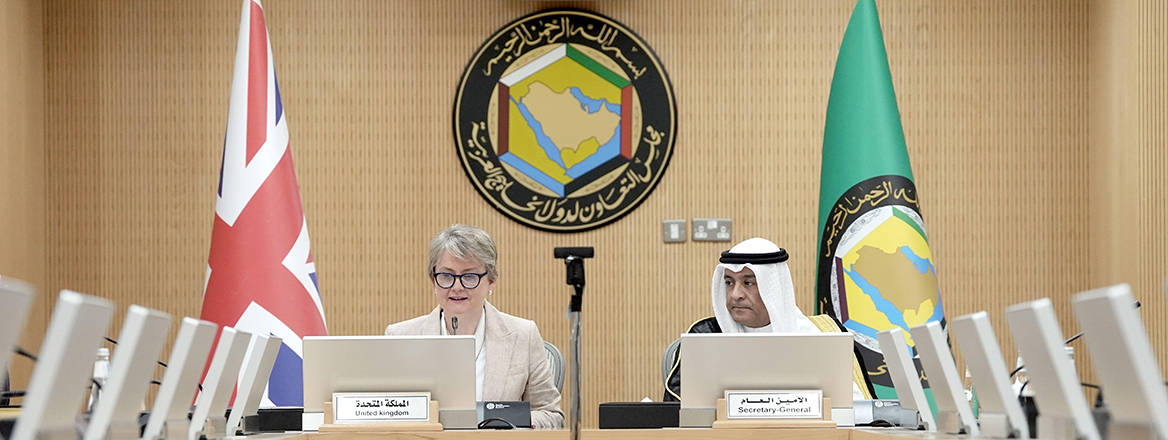
For medium powers in Europe there will also be opportunities. The UK and France have played an active role in defence of Gulf airspace and have broadly performed with skill and a high degree of success. It should come as no surprise that the Gulf monarchs are relatively disinterested in Sir Keir Starmer’s domestic problems and are instead looking for a cast iron sign of commitment that outlasts Prime Ministerial terms of office. For Paris and London, as well as Berlin and other capitals across Europe, this is the time to build lasting commitments that reassure the Gulf States. Given governments across the continent are also struggling to redefine their security in the face of Trump’s volatility there is actually much that they share in common with Doha, Abu Dhabi and Riyadh.
The Challenges of Collective Action in the Future
Coming to a collective understanding on what to do next will be difficult. The GCC is not renowned for its ability to move as a collective, and the various spats between its authoritarian leaders have proven a significant headache in recent years. It is this internal dysfunction that has presented Iran’s missile and drone operators with opportunities, picking off city states one by one, moving the centre of attack from Dubai, to Kuwait, and over to Doha and Saudi Arabia with a rhythm designed to cause maximum disruption, and keep all six countries occupied and busy with their own individual defence needs.
But there can be no going back to business as usual, and if there is to be no repeat of the widespread disruption the GCC has faced to date then the lesson is clear: the security problems of one state directly impact those of another, and they are all losing billions of dollars collectively as a result. This will be a moment for reassessment and reappraisal. Whether the Gulf States are willing and able to come together collectively to rethink their regional and global security is up to them, but there are willing partners ready to assist and support as they do so.
© RUSI, 2026.
The views expressed in this Commentary are the author's, and do not represent those of RUSI or any other institution.
For terms of use, see Website Terms and Conditions of Use.
Have an idea for a Commentary you'd like to write for us? Send a short pitch to commentaries@rusi.org and we'll get back to you if it fits into our research interests. View full guidelines for contributors.
WRITTEN BY
Michael Stephens
RUSI Senior Associate Fellow, RUSI International


- Jim McLeanMedia Relations Manager+44 (0)7917 373 069JimMc@rusi.org