

Fentanyl in Italy and the European Opioid Market

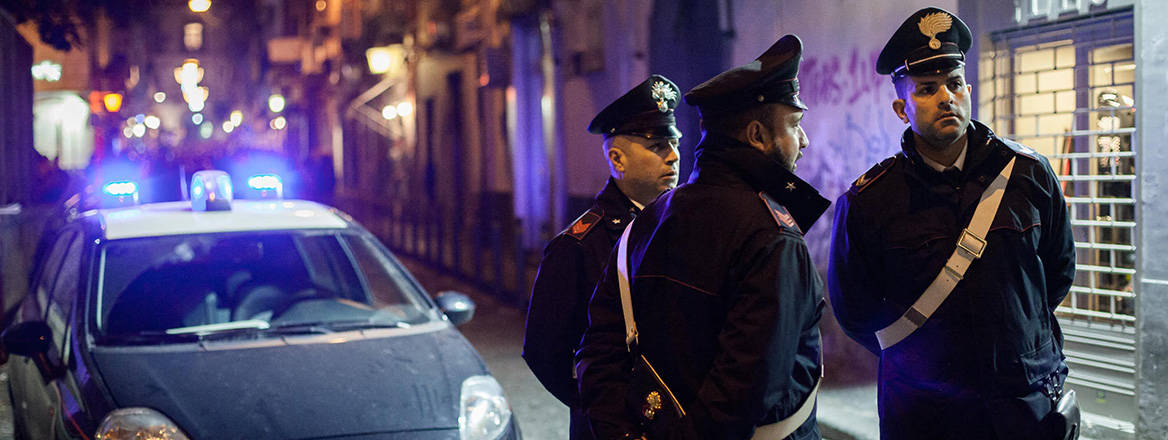
Italy’s low fentanyl death toll reflects Europe’s distinct opioid market history, not mafia restraint – but synthetic opioids such as nitazenes are a growing threat.
Italy has recorded very few deaths involving fentanyl. A September 2026 article in The Economist invokes The Godfather films to suggest that ‘the country’s mafias seem to have collaborated to keep fentanyl out of their territory,’ protecting their established markets from a substance that kills customers and attracts police attention. Such a hypothesis had already been put forward by Roberto Saviano in La Repubblica. While it is an intriguing theory, there is no evidence for it. To understand the absence of an American-style fentanyl crisis in Italy as well as in other parts of Europe, we need to look at the history of opioid markets, rather than assume that godfathers hailing from unnamed ‘mafias’ are out there to protect their fellow countrypeople.
Low Numbers Across Europe
Fentanyl was identified in two fatal acute intoxications in 2024 and five in 2025, according to the annual reports to the Italian Parliament. The two 2024 cases also involved other substances. Surely, this is a low number. The Economist contrasts these figures with the cases recorded in Germany, suggesting a possible ‘Italian mafia effect’. ‘Germany had 95 [fentanyl fatal intoxications in 2024],’ informs us the author of the article. Actually, the German Federal Criminal Police Office (BKA) table records 98 deaths: 22 in the single-substance category and 76 in the multiple-substance category. Crucially, the BKA methodological note says that neither category requires the intoxication, or the detected substance, to have caused the death. So even the 22 cases must not be presented as a corrected total of deaths caused by fentanyl alone. Italy’s two cases in 2024 were fatal acute intoxications in which fentanyl was implicated in the cause of death. The Italian figure measures a narrower outcome. Presenting these numbers as equivalent exaggerates the apparent contrast between the two countries. In any case, one must look at data from other European countries too.
Pharmaceutical marketing and widespread prescribing helped create a large population dependent on opioids before illicit fentanyl became common
In the Île-de-France region (which comprises Paris), fentanyl or an analogue was detected in 12 of 1,199 deaths examined between 2017 and 2021, approximately 1% of that forensic series, or 2.4 cases a year on average. Nine involved fentanyl, two ocfentanil and one sufentanil. Eight deaths occurred in a context of drug use and four were suicides. There is at least one other study that reports French data: a report published in 2026 describes 13 deaths with post-mortem fentanyl detection between 2020 and 2025 in the jurisdiction of the Strasbourg court, approximately 2.2 fatalities a year. Other psychoactive substances were present in around 70% of cases. These studies cannot establish a national French mortality figure, and their annual averages may conceal changes over time. Nevertheless, they provide examples of low recorded numbers outside Italy. Incidentally, country-level data should be adjusted for population size, something The Economist should have done when citing the German figure. The population of that country is about 42% bigger than Italy’s.
Different Market Histories
Why are the numbers so low in much of Europe? Rather than the benevolent hand of the Italian mafiosi, history is at play: the European and American opioid markets developed differently. As is well known and documented in the insightful and disturbing TV series Dopesick and in Patrick Radden Keefe’s Empire of Pain, doctors in the US increasingly prescribed opioid painkillers from the 1990s. Thus, pharmaceutical marketing and widespread prescribing helped create a large population dependent on opioids before illicit fentanyl became common. Some people who initially used prescribed opioids subsequently turned to heroin as access to pills changed. Heroin overdose deaths rose rapidly from around 2010, followed from 2013 by substantial increases in deaths involving synthetic opioids, particularly illicitly manufactured fentanyl. Illicit fentanyl entered this established market through heroin supplies, counterfeit pills and other mixtures. Sadly, in the US, 47,735 overdose deaths involved synthetic opioids other than methadone in 2024. Europe did not experience the same prescribing-driven expansion, while heroin remained the principal illicit opioid in much of the Continent.

No Benevolent Godfathers
The suggestion that mafias are protecting their customers cannot explain Italy’s serious crack problem. Crack can cause dependence, psychosis, cardiovascular complications, strokes, seizures and lung damage and of course death. Fentanyl can suppress breathing and also cause fatal overdose. The drugs have different risk profiles, but both are highly toxic. The Palermo provincial health authority (ASP)recorded 159 admissions in 2025 in the city’s residential reception centre, largely involving crack dependence. By all accounts, crack is one of the major addiction emergencies in the Sicilian city.
Mafias have repeatedly supplied or dealt in dangerous commodities. Roberto Saviano himself has documented in Gomorrah how the Camorra was only too happy to dump hazardous material in its own backyard. In the book’s last chapter, titled Terra dei fuochi, he writes: ‘The bosses had no qualms whatsoever about lining their own towns with poisons, letting the land surrounding their own villas and domains rot’ (‘I boss non hanno avuto alcun tipo di remora a foderare di veleni i propri paesi, a lasciar marcire le terre che circondano le proprie ville e i propri domini,’ new edition, 2026, p. 345). Appropriately, he returned to this topic with articles in l’Espresso and Repubblica. Research reported by Italy’s National Institute of Health has indeed found associations between illegal waste disposal and elevated mortality from several cancers in the provinces of Naples and Caserta.

The Italian American mafia has also participated extensively in drug trafficking, contrary to the image suggested by the Godfather films, and from the start. In 1935 Serafino Mancuso was sentenced to 40 years in prison by a US court for narcotics trafficking (see Gambetta, The Sicilian Mafia, p. 234). Sicilian mafiosi were caught with two kilos of cocaine in 1949. It is extraordinary that the stereotype of the good mafioso reluctant to deal in drugs still persists, going against well-established historical evidence.
Most crucially, a recent investigation in the very heart of mafia territory shows links between Sicilian mafia members and crack dealing. In the Vucciria neighbourhood of Palermo, in 2024 investigators obtained 10 precautionary measures – eight custodial detentions, one house arrest and one reporting obligation – in a crack and cocaine trafficking investigation. They alleged that people close to the Porta Nuova mafia family headed the network, organised supplies and exercised monopoly control over retail dealing locations.
If money can be made, a group, which is either part or is not part of an established mafia, would likely start supplying the product
More generally, how plausible is it that several (so far unnamed) Italian mafias would collude to reduce supply? Not very. For instance, between 1974 and 1979 Sicilian mafiosi tried to enforce a shift system to reduce the influx of illegal cigarettes to the island. The cartel collapsed in 1979 because the Neapolitan smugglers of cigarettes, who had in principle agreed to stick to the rules, undercut each other. As Antonino Calderone said, ‘[the cartel collapsed] because of the difficulty of ensuring that everybody kept their promises’ (cit. in Gambetta, Sicilian Mafia, p. 233). This case refers to Cosa Nostra and the individual smugglers only. As the number of players increases, the likelihood of cheating also increases. If money can be made, a group, which is either part or is not part of an established mafia, would likely start supplying the product.
The Synthetic Opioid Threat
Of course, the current low presence of fentanyl in Europe does not suggest that it will never spread, although it is very unlikely that it will have the same prominent role as in the US market. For instance, 80 fentanyl vials were stolen from the Ospedale Israelitico in Rome in June 2026. According to a government estimate, up to 20,000 illicit doses could be produced, although this estimate has been widely disputed by experts. A fentanyl production laboratory was discovered in Sofia in August 2026. Potent synthetic opioids are also being reported by police forces in Europe. In 2024, nitazenes, a family of synthetic opioids distinct from fentanyl, were linked to 43 of 97 reported drug-induced deaths in Estonia and 36 of 77 in Latvia. Since 2019, at least 21 EU member states have reported a nitazene. Ten countries detected more than 50,000 nitazene-containing tablets in 2024, compared with approximately 23,000 in 2023 and 380 in 2022. High potency permits transport of many doses in small quantities and synthetic production does not require poppy cultivation. These developments show why the absence of an American-style fentanyl crisis should not be mistaken for protection against potent synthetic opioids more generally.
The Economist’s argument fails at several levels. It treats Italy as exceptional without adequately considering the wider European picture, compares mortality figures that measure different things, and turns the historical trajectory of the European drugs market into an unproven agreement among unnamed Italian mafias. Italy’s low fentanyl numbers are welcome. Attributing them to the wisdom of godfathers fuels the myth of the benevolent gangster, which in turn increases the reputation of these criminal groups. The Godfather trilogy is a wonderful piece of modern storytelling, and it has entered the history of cinema. This is the place where it should remain
© Federico Varese, 2026, published by RUSI with permission of the author.
The views expressed in this Commentary are the author's, and do not represent those of RUSI or any other institution.
For terms of use, see Website Terms and Conditions of Use.
Have an idea for a Commentary you'd like to write for us? Send a short pitch to commentaries@rusi.org and we'll get back to you if it fits into our research interests. View full guidelines for contributors.
WRITTEN BY
Federico Varese
Guest Contributor


- Jim McLeanMedia Relations Manager+44 (0)7917 373 069JimMc@rusi.org