

Creativity and Innovation: The Play Advantage

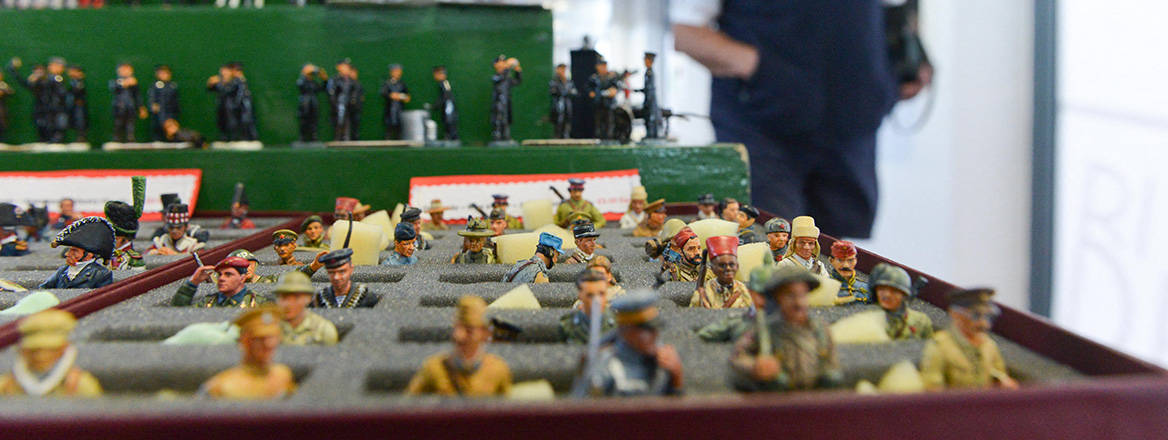
Solutions may be found in unconventional ways.
Creativity and innovation are prerequisites for inventing new solutions to evolving problems. Defence, national security and societal resilience all require an ability to generate novel ideas (creativity) and then convert the best of those ideas into a functioning reality that is adopted and used (innovation). Without creativity, innovation withers.
The Innovation Problem
Risks to national security arise from intelligent threat actors such as hostile foreign states and terrorists, who use their malevolent creativity to devise new ways of defeating our defences. The risks are therefore dynamic and adaptive – they change over time, often rapidly, and they adapt in response to our defensive behaviour. To have any chance of staying ahead in this perpetual arms race, we must be dynamic and adaptive in inventing new ways of defending ourselves against the evolving risks. Creativity and innovation are similarly vital for finding better ways of strengthening the resilience of societies and nation states. However, history suggests that businesses, organisations and governments need all the help they can get in this domain. Convoluted governance, turgid bureaucratic processes, and slow-moving legislation and regulation are highly effective mechanisms for suppressing creativity and innovation. Fortunately, help is at hand in the form of a lesson from biology.
A Playful Solution?
The biological world has long been a source of inspiration for scientists and engineers. Bio-inspiration can also inform new ways of thinking about national resilience. Darwinian natural selection has produced exquisite solutions to the complex problems of surviving and reproducing in an uncertain world. Flight, communication and the immune system are just three examples. So, what can biology tell us about creativity and innovation? One answer lies with the highly distinctive type of behaviour known as play.
Organisations wishing to encourage playful creativity and innovation need to relax and give players the time and space to engage in genuine play, both individually and in groups
Play behaviour is a near-universal design feature of animals with brains, including humans. Biologists have debated the precise definition of play for more than a century. Nonetheless, most would agree that play behaviour has several striking characteristics that distinguish it from other categories of behaviour. Foremost among these are:
- Play appears to have no immediate practical goal or benefit. The adaptive benefits are assumed to accrue later. Play is the antithesis of serious behaviour or work.
- Play occurs in a safe, protected context in which the player is largely insulated from the normal consequences of their behaviour. For example, animals or children may play at fighting without causing physical harm.
- Play is fun. The behaviour is spontaneous, intrinsically motivated, and rewarding in its own right. Animals will work to receive opportunities for play.
- Play is a generator of novelty. It consists of actions taken from the normal behavioural repertoire but expressed in novel combinations and sequences. Actions may be incomplete or exaggerated and performed repeatedly.
- In the case of humans, play may include thoughts as well as physical actions.
- Play is most evident during the early stages of an individual’s development. Young animals typically play more than adults.
- Play is highly sensitive to prevailing conditions and occurs only when the player is free from illness, anxiety, fatigue or stress. It thrives only in safe, high-trust environments.
- Play cannot be turned on at will. An individual cannot be forced to play.
- Play in humans (and probably other species) is accompanied by a positive mood state in which the individual is more inclined to behave and think in novel and flexible ways. This mood state distinguishes genuine play (or ‘playful play’) from serious forms of pseudo-play behaviour such as competitive sports, formalised war-gaming, and other rule-governed activities. Play is about breaking rules, not slavishly following them.
In addition to debating the definition of play, biologists have argued about its functions – that is, the biological benefits that play presumably brings in order to have evolved. The most commonly proposed functions include honing complex locomotor and social skills, preparing the individual to cope with unexpected situations, and learning about the local environment. Humans and some other large-brained species may additionally benefit from the ability of play to generate novel patterns of behaviour or thought and hence create novel solutions to problems. In humans, the playful mood state is associated with divergent thinking, which is the ability to generate new ideas. Some of the most creative people in history, including Mozart, Picasso, Alexander Fleming, and Nobel Prize-winning physicist Richard Feynman have been noted for their playfulness. That said, creativity is not essentially a solitary activity: great ideas also emerge from playful interactions between individuals.
Playfulness in humans is also associated with humour, which may be viewed as a form of playful creative rule breaking. In common with play, humour promotes a positive, light-hearted mood; it works best in a safe context, where the normal consequences are largely disregarded; it is intrinsically motivated and rewarding in its own right; and it sometimes generates novel ideas that fuel creativity. Humour, like play, cannot be produced to order and it is easily suppressed by adverse conditions.

Help your search results show more from RUSI. Adding RUSI as a preferred source on Google means our analysis appears more prominently.

We believe that play should be regarded as a mode of thinking and behaving that fosters creativity and innovation. Play is a biological adaptation that enables humans and other animals to escape from conventional patterns of behaviour and thought and discover novel solutions to life’s challenges by breaking rules in a protected environment. Most of what happens during play is nonsense, but occasionally it throws up something of real value. A novel idea that is generated and tested in the safe context of play may be turned into something useful.
What does this mean in practice for defence and security? Organisations that aspire to be more innovative might benefit from facilitating genuine play, in addition to whatever orthodox processes they already use to drive innovation. If so, they should bear in mind the distinguishing characteristics of play, and how these differ from conventional business methods such as brainstorming. In particular, they should recognise that play cannot be produced to order. Creative play relies on a playful mood state that is easily stifled by formalised procedures or hidden incentives. Play only thrives in a high-trust environment where the players are insulated from the normal consequences of their behaviour. Instructing people to participate in a scheduled brainstorming session, in which there are supposedly ‘no bad ideas’ (though everyone secretly knows there are bad ideas), is likely to be anything but playful. Another sure-fire way of killing play is with the dead hand of organisational processes like performance metrics and project management methodology.
Our take-home message is that organisations wishing to encourage playful creativity and innovation need to relax and give players the time and space to engage in genuine play, both individually and in groups. They should consider how artists, musicians, writers and scientists generate their most creative ideas – as distinct from the humdrum outputs of the daily grind. Creative people make new connections between existing ideas and combine them in new forms, breaking away from established patterns of thought. The best insights often emerge spontaneously when people are out walking, chatting with friends over coffee or in the pub, or daydreaming. In addition to boosting creativity, play and playfulness help to build relationships and improve job satisfaction. Organisations should recognise that they cannot manufacture creativity – and hence innovation – by decree. What they can do is create psychologically safe conditions in which playful thinking is allowed to emerge.
We recognise that defence and security organisations tend to be highly structured and process oriented, for good reasons. Enabling playful thinking and behaviour is therefore likely to be counter-cultural. Our suggestions about playful ways of enhancing creativity and innovation might seem frivolous in these turbulent times. Nonetheless, the evidence from biology tells us they deserve consideration. Play might just offer that crucial advantage.
© Peter Biggins, Paul Martin and Stig Rune Sellevåg, 2026, published by RUSI with permission of the authors.
The views expressed in this Commentary are the authors', and do not represent those of RUSI or any other institution.
For terms of use, see Website Terms and Conditions of Use.
Have an idea for a Commentary you'd like to write for us? Send a short pitch to commentaries@rusi.org and we'll get back to you if it fits into our research interests. View full guidelines for contributors.
WRITTEN BY
Peter D E Biggins
Dr Paul Martin CBE
Distinguished Fellow


Stig Rune Sellevåg
- Jim McLeanMedia Relations Manager+44 (0)7917 373 069JimMc@rusi.org