

Beyond Disruption: The Hidden Economics of Houthi Attacks

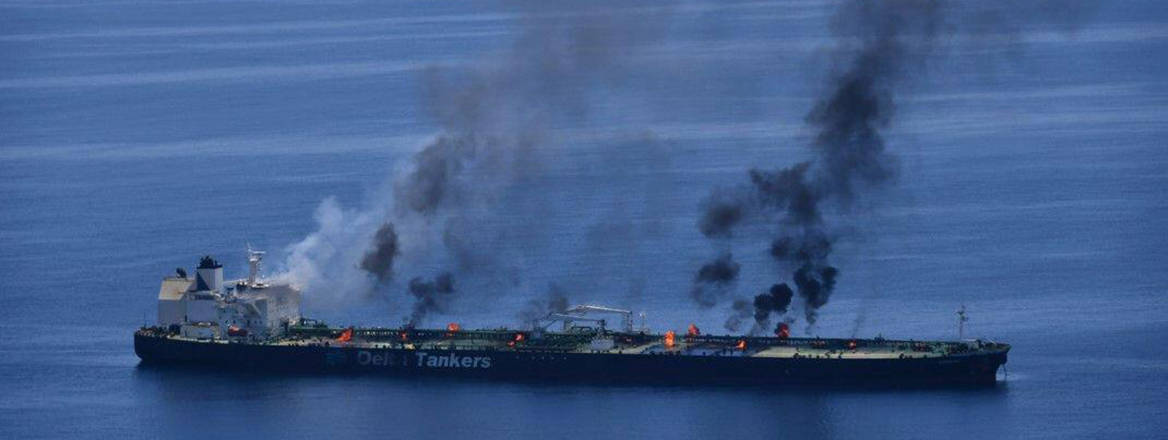
Houthi attacks on shipping are read as an instrument of geopolitical pressure. That reading is incomplete. The attacks have a second, less visible effect – and it is economic.
Since late 2023, the attacks in the Bab al-Mandeb strait have done something easy to misread. They did not stop trade. They made it more expensive. That distinction matters more than it appears.
According to the International Monetary Fund, more than 60% of container shipping was rerouted via the Cape of Good Hope. The system did not collapse. It repriced. A strategic chokepoint – a narrow passage on which global trade depends – is no longer just a location. The strait has become a machine for extracting risk premiums from everyone who depends on it.
The Direct Transmission: Insurance and Freight
Vessels transiting conflict zones pay war risk premiums, a supplementary charge that shipowners pay insurers for passage through designated danger areas. According to Lloyd’s List, these premiums rose more than twentyfold: from approximately 0.05% to over 1% of the vessel’s insured value. For a large tanker, that translates to as much as $1 million per voyage. Freight rates followed. Bloomberg reported that charter rates for the largest tankers reached $400,000 per day. Drewry’s World Container Index confirmed a sustained rise across container freight categories.
The asymmetry here runs deeper than it looks. Physical damage to most vessels was limited. Financial impact was not. The market today pays not for damage done, but for damage expected. This is the new normal in the insurance market.
Risk does not kill economies. It reroutes the money flowing through them. What looks like an insurance market responding to a threat is, on closer inspection, a redistribution mechanism that functions regardless of whether ships actually sink.
Markets Price the Signal, Not the Event
Oil prices began to move before news of attacks reached the market. Not after. Before. The IEA Oil Market Report documented successive cycles of price sensitivity to escalation signals, confirming the pattern was not incidental.
The pattern is consistent. A public statement, a shift in rhetoric, an attack within 6 to 36 hours. This does not make events fully predictable. It creates short periods during which the likelihood of an attack is materially higher than the baseline.
Markets are no longer external observers of this conflict. They have become the mechanism through which geopolitical risk is converted into financial value, and simultaneously amplified.
Not all Houthi leaders carry equal weight when it comes to real action. Particular predictive weight attaches to operational statements by Yahya Sarea, the official military spokesman of the Houthis and the sole authorised source of communications regarding specific military operations. Operational signals specifying a target or method correlate with attacks within 0 to 24 hours, as documented by US Central Command and UK Maritime Trade Operations. General statements of intent are considerably weaker. The 27 March 2026 statement preceded a ballistic missile attack on Israel by one day. On 4 April, Sarea announced a coordinated strike on Ben Gurion Airport in conjunction with Iran and Hezbollah — the attack was confirmed the same day.
The transmission runs through derivatives, financial contracts that allow a bet to be placed on a price movement before that movement occurs. Those who read the signal before it reaches the headlines have already placed their bets. By the time the price moves visibly, the position is set.
The market responds to everything on an upward curve, with no clear ceiling. After each incident it grows more sensitive to the next signal: insurance gets more expensive, uncertainty compounds. All it takes is for one Houthi leader to say ‘Boo!’ – or ‘Fee-fi-fo-fum’ – and the rates move. No ships need to sink for that.
Geopolitical instability no longer arrives from outside markets. It feeds them from within.
By 2025-2026, this dynamic had changed in kind, not just in scale. The Lloyd’s of London Joint War Committee began pricing not actual attacks but the probability of future ones. Premiums are set ahead of events. Risk zones expand pre-emptively. Decisions are driven by geopolitical signals, not incident reports. Insurers are no longer waiting for events. They price the probability of events.
Routing via the Cape of Good Hope is now partially the norm, as documented by UNCTAD’s Review of Maritime Transport. Freight rates respond asymmetrically: up very fast, down for some reason slowly. Each new crisis raises the price floor. Not temporarily. This is now permanent.
A new category of premium has emerged: not for risk but for the expectation of risk. The effect is distributed unevenly. Europe bears concentrated costs. The US experiences moderate impact. Asia absorbs the shock partially, via diversified supply routes and alternative sourcing arrangements.
The Architecture of Informational Advantage
Where a sustained relationship exists between a political actor and an armed group, one side gains access to information before it becomes public. This does not require coordination. It arises from the nature of the relationship itself.

Yahya Sarea’s operational statements precede real actions with high temporal precision. A significant volume of falsely attributed or fabricated statements also circulate, for which a specific source-verification protocol has been developed. That documented precision is not incidental: where such a pattern exists between a public statement and a military action, those who monitor it in real time gain a window the broader market does not have – as the price movements documented above confirm.
Under conditions of sustained sanctions pressure, networks of intermediaries and alternative financial channels form. This is documented in materials published by the US Department of the Treasury.
Coordination is not required. If the system is arranged so that some know before others, the profit redistribution follows. It does not need to be orchestrated.
China is not a direct beneficiary. It may, however, be a relative beneficiary by design of the system. The shock is distributed asymmetrically: Europe bears more concentrated costs, China absorbs the impact more effectively through diversified routes and supply relationships. The vulnerability gets redistributed. Who benefits and who absorbs the cost depends on the map, not the headline.
The conventional question is: who controls the territory? The more consequential question here is: who controls the timing. Because that is what allows entry into the market before the event.
Conclusion
Three layers of effect operate simultaneously. The first layer – rising costs of insurance and freight. The second layer – predictable price movements. The third layer – built-in advantage for those capable of using those movements. Each successive layer is invisible to those watching only the one before it. How exactly these layers feed each other is not fully understood. Not by this author, and probably not by anyone.
Markets are no longer external observers of this conflict. They have become the mechanism through which geopolitical risk is converted into financial value, and simultaneously amplified.
Security is now a pricing layer. That shift happened quietly, without a formal announcement, and most trade policy discussions have yet to account for it.
The Red Sea is gradually becoming not only a zone of geopolitical risk but a space where information, expectations and markets mutually reinforce one another, generating conditions for repeatable economic effects.

Questions remain without answers. Will the Houthis maintain the balance between enough pressure to matter and too much pressure to ignore? If the economic mechanism of maritime disruption is now visible and its architecture described, why does the scheme persist, and who is already using it? War risk premiums rise fast and fall slowly: who decides that a zone is no longer dangerous, and does that decision carry a financial motive? If China absorbs the shock of Red Sea disruption more effectively than Europe, is the continuation of instability part of its geoeconomic calculus, even if publicly unacknowledged? And if energy markets begin moving before attacks occur rather than after, who is forming the primary signal, and is Yahya Sarea’s statement a trading strategy as much as a military one?
On 3 April 2026, the US doubled the DFC maritime insurance programme to $40 billion for shipowners willing to transit the Strait of Hormuz, adding six new underwriters: Travelers, Liberty Mutual, Berkshire Hathaway, AIG, Starr and CNA. The first $20 billion was not fully utilised. Whether the doubling represents an attempt to break the impasse, or confirmation that a financial instrument operates differently from what was anticipated, remains an open question. An analysis of the first cycle of this programme is available in the author’s previous commentary for RUSI.
If Sarea’s statement is the visible end of a chain that begins in Tehran – what does the origin of that chain look like before it reaches Western newsrooms? Iranian sources edit their own reporting within hours of publication – shifting tone, removing claims, changing emphasis – before verification catches up. By the time the narrative reaches the international space, it has already passed through an editorial and cultural filter, arriving late and reinterpreted. Is what reaches the outside world the signal itself – or its shadow? If the source itself is not stable – disappearing from access, reappearing through archives, diverging across agencies – can it be treated as a reliable source and a predictable reality at all? And if that gap creates a systematic informational advantage – the question is no longer whether a methodology for classifying unstable sources and fixing signals before they are filtered exists. The question is who is using it.
A verified event log covering Houthi signalling patterns from 2023 to 2026, with source-level data and methodology, is available to editors and researchers on request.
© Valery Bonakhau, 2026, published by RUSI with permission of the author.
The views expressed in this Commentary are the author's, and do not represent those of RUSI or any other institution.
For terms of use, see Website Terms and Conditions of Use.
Have an idea for a Commentary you'd like to write for us? Send a short pitch to commentaries@rusi.org and we'll get back to you if it fits into our research interests. View full guidelines for contributors.
WRITTEN BY
Valery Bonakhau
Guest Contributor


- Jim McLeanMedia Relations Manager+44 (0)7917 373 069JimMc@rusi.org