

Andy Burnham’s International Debut: Key Challenges and Opportunities

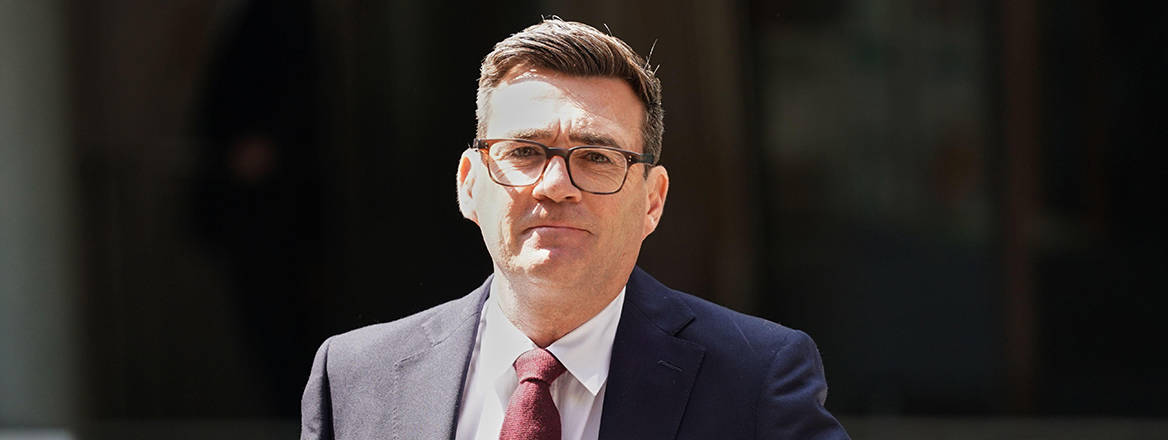
Prime Minister Andy Burnham faces a challenging international context, with intractable problems, but also opportunities to lead and exert UK influence on world events.
Top of the Prime Minister’s ‘to-do’ list will be generating the economic growth the UK and the Labour Government so badly needs to improve public finances, deliver its commitments on public services and ease the cost of living crisis. Burnham has called for ‘good growth in every postcode’ and will be hoping to harness UK foreign policy to help achieve this vision. But interacting unhelpfully with this agenda are a series of security and foreign policy challenges that will undoubtedly consume significant attention and resources in the coming months.
Ongoing Conflicts
The collapse of the US ceasefire with Iran and the ongoing violence and disruption to trade in the Strait of Hormuz will dominate in the coming days, demanding immediate prime ministerial attention. The Islamabad Memorandum of Understanding, with its outline ceasefire and sixty day negotiating period, is in theory still in play, and the hope will be to return to this quickly. The UK has not thus far played a prominent role in talks, but it will be important for the UK Prime Minister to signal he is engaged. Outreach to the Gulf States, Turkey and Pakistan, providing reassurance on UK defence commitments where these exist and on UK support for the negotiating process they have led, will be important steps.
The near universal agreement amongst states of the need to reassert freedom of navigation in the Straits is one area of potential traction and influence and the UK and France have already stated their intention to work with Oman to ensure its territorial waters are safe for navigation. But the Prime Minister will need to tread carefully to avoid being sucked into what threatens to become a perma-conflict with Iran. The US adoption of Israel’s way of war – seeking to manage threat through routine ‘mowing the grass’, rather than strategic resolution – foreshadows a long period of instability requiring ongoing conflict management.
A move by Putin to shift the dynamics in Ukraine could pose a significant challenge in Burnham’s first six months, but if he is able, also allow the Prime Minister to further burnish his foreign policy credentials
Meanwhile, Russia’s war on Ukraine continues to grind on. Ukraine’s current ascendancy on the battlefield and the growing negative implications of the war for Russia’s economy are raising hopes that Moscow could seek some sort of ceasefire. But if anything, the signs are that Putin is doubling down and could instead seek escalation – in an effort to secure something that he can sell as a ‘victory’. A move by Putin to shift the dynamics in Ukraine could pose a significant challenge in Burnham’s first six months, but if he is able, also allow the Prime Minister to further burnish his foreign policy credentials. The UK government and Burnham himself have been clear on the need to demonstrate long term support to Ukraine, signalling to Russia the UK will be there for as long as it takes. This will become even more important in a situation of escalation, where a UK Prime Minister would have a central role to play in bringing UK, European and US support to bear for Ukraine and helping President Zelensky manage the pressures he could face for a premature ceasefire.
International Organisations and Alliances
The backdrop to these two major crises is the ongoing transformation in the UK’s core international relationships. Here the Prime Minister has the twin challenges of keeping the US engaged in NATO and on-side as an essential security and intelligence partner, while defining a position that stands apart from the US, and forging a closer relationship with Europe and some of the emerging powers of growing importance to the UK’s prosperity.
It goes without saying that establishing an effective rapport with President Trump – to help mitigate the risks posed to the UK from the Administration’s rapid shifts in policy and prepare the ground for engagement on shared strategic concerns – will be a key priority.
On Europe, a planned summit between the new UK Prime Minister and EU leaders (postponed when Keir Stramer resigned) is likely to offer an early platform for engaging with European leaders, and for pursuing a number of issues of shared concern on security, on the economy and on migration. It is almost certain the mood music will be good as Europeans have a strong interest in demonstrating solidarity with Prime Minster Burnham, but longer term, it remains unclear if Europe is yet fully on board with a new relationship with the UK that moves beyond Brexit and focuses on the needs of the situation today.

Help your search results show more from RUSI. Adding RUSI as a preferred source on Google means our analysis appears more prominently.

This requires new political dynamism and it will be interesting to see how the Prime Minister steps up to leadership at the European level, including potentially deploying his nascent political vision of ‘Manchesterism’. But being the new kid on the block and the latest in a long list of prime ministers will increase this challenge, alongside the impact of domestic politics and priorities across the continent. While there is a window of opportunity for Burnham to work with French President Macron on Ukraine, on Iran and on relations with the EU, the French presidential elections scheduled for April 2027 could slowly drain Macron’s mandate and attention.
Further afield the Prime Minister steps into a world where strategic agility – building partnerships and issue-based coalitions – is of growing importance, not only for tackling crises, but also the long term challenges in international relations such as climate change and technology regulation. International summits will provide opportunities for wider engagement and coalition building, and demonstrate his priorities. Burnham will likely attend the UN General Assembly in September. In November he will need to decide if he will attend COP31 in Antalya where his absence would be considered a backward step on climate and energy transition. He will then need to establish his priorities for the G20 UK will be hosting next year.
Structuring Defence and Diplomacy
Making progress on all these issues, plus many more – Gaza, Sudan, handling China – will all depend on the relationship that Burnham builds with his key Cabinet colleagues and on nimble diplomacy. On a practical level it will not help that the Foreign, Commonwealth and Development Office continues to be distracted by a painful internal restructuring exercise, that threatens a reduction in capability across diplomacy, development and deep expertise. And while the publication of the Defence Investment Plan has finally allowed the Ministry of Defence to move on from this drama, the Department’s budget remains thinly stretched with on-going questions on what aspirations in the Strategic Defence Review will need to be delayed and whether and how the MOD can set a course to spending 3.5% of GDP on defence by 2035. The US and European allies will be looking for Andy Burnham’s leadership on this.
These problems reduce institutional capacity and the tools the new Prime Minister will have at his disposal as he aims to burnish his credentials in international affairs and work with partners to tackle the international challenges that abound. Nonetheless, the UK strengths of ;diplomatic experience and reach, military capability, economic influence and soft power continue to empower a prime minister able to effectively deploy these levers.
© RUSI, 2026.
The views expressed in this Commentary are the author's, and do not represent those of RUSI or any other institution.
For terms of use, see Website Terms and Conditions of Use.
Have an idea for a Commentary you'd like to write for us? Send a short pitch to commentaries@rusi.org and we'll get back to you if it fits into our research interests. View full guidelines for contributors.
WRITTEN BY
Rosalind Roberts
Director of Research
Senior Management


- Jim McLeanMedia Relations Manager+44 (0)7917 373 069JimMc@rusi.org