

Allies Should Unite on Defence Finance

NATO Allies should come together to form a defence financing instrument that supplements national defence spending, improves companies’ access to affordable capital, and incentivises joint procurement.
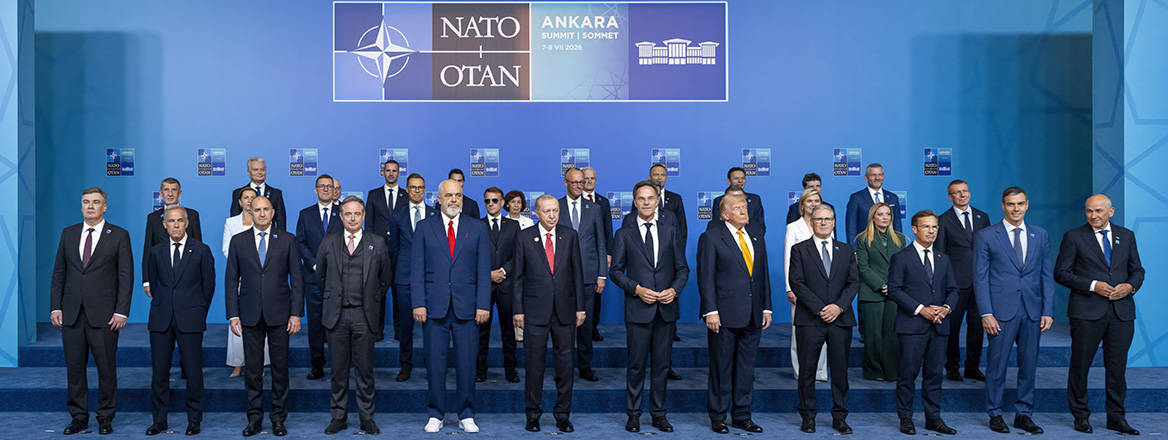
The UK’s then Prime Minister, Sir Keir Starmer, narrowly managed to save face when meeting his colleagues at this year’s NATO Summit in Ankara. Behind him lay several weeks of fierce political debate about the direction and ambition of the UK’s Defence Investment Plan (DIP), which sets out the government’s defence investment priorities and budget for the coming years. The compromise result promises an increase of circa £15 billion but falls significantly short of the £28 billion in additional investment the UK’s Strategic Defence Review assessed as necessary. While most NATO countries need more money for defence, finding the money is difficult, particularly for Allies with limited fiscal headroom or scope to cut spending in other areas of government. As such, politicians across Europe and in Canada are looking for creative ways to finance the promised significant, long-term increases in defence spending while not upsetting the public with higher taxes, increased debt, or more guns-vs-butter trade-offs.
One solution is common borrowing, which can enable countries to borrow money at lower interest rates and on more favourable repayment terms.
The EU’s Security Action for Europe (SAFE) programme is one such mechanism, allowing EU members to borrow money through the EU, as long as they procure a capability with at least one other EU nation. Unfortunately, the instrument is limited in scope and duration ((€150 billion until 2027) for now, and many EU member states can borrow at more favourable national rates. Also, as SAFE is not equally accessible to non-EU Allies (for instance, because at least 65% of component costs must originate from within the EU), it can disrupt cross-border supply chains and prevent nations from procuring the best equipment.
To address these challenges, the UK, together with the Netherlands, Finland and Poland, proposed the Multilateral Defence Mechanism (MDM) at the NATO Summit in Ankara. Based on the few details publicly available, the MDM aims “to lend to members for joint procurement, stockpiling on members' behalf, and supply chain finance”. Its proponents claim that cheaper lending may be unlocked by aggregating demand among MDM members through multi-year procurements or joint stockpiling of equipment, which could be used as security for borrowing. The latter would be particularly attractive as it keeps debt off national balance sheets, with the initial liability being held by the MDM. The idea is that countries can draw down from the stockpiles as and when needed, turning what was once an upfront capital expenditure into an operating cost down the road. And MDM may also have a mandate to fund early-stage R&D cooperation among Allies. The hope is that connecting states’ access to cheaper borrowing with joint procurement and pooled R&D will encourage them to work together rather than go it alone. The UK’s DIP allocates £400 million to the MDM.
However, some experts doubt that the idea to leverage stockpiles facilitates cheaper borrowing. Munition stockpiles have a very limited market and are, therefore, highly illiquid. They also cost money to maintain, as they require secure infrastructure facilities, insurance, and, at the end of their shelf live, they produce disposal costs if not used. Unless states commit to buying a set share of stockpiles in advance (which would put these costs back on their balance sheets), a mechanism with these commitments may have difficulty to attract the AAA rating required to facilitate low-cost borrowing.
Europeans often get less for their money when buying defence equipment than more consolidated markets such as the US
But for NATO Allies, who have struggled to aggregate demand even in areas where shortfalls are critical, a fiscal incentive may be the missing ingredient to incentivise joint procurement. To this day, European countries operate numerous platforms and weapon systems, resulting in duplication, increased costs, and a loss of synergy in R&D efforts. Even when Europeans operate the same system, they often fail to coordinate their procurement cycles, support and maintenance packages, and associated consumables. The result is a landscape of European states competing for the same market share, and companies that lack clarity on long-term demand, which makes commercially sensible investments in production capacity difficult. As a result, Europeans often get less for their money when buying defence equipment than more consolidated markets such as the US.
In addition to governments’ challenge finding more money for defence and procuring more jointly, the defence industry needs capital to scale up production capacity in anticipation of the increased demand. In particular, smaller, highly specialised companies and defence SMEs often struggle to access commercial banking loans, as banks see risk in the slow pace of government procurement, export restrictions that might limit future sales, reputational concerns associated with investing in defence, and wider banking regulations that require high capital ratios for loans to unrated companies that lead to high interest rates for SMEs or low commercial incentives for banks to lend to such companies . Limited production capacity risks leaving production lines (even more) oversubscribed, which could lead to price inflation for defence equipment, and further exacerbate the fiscal pressures on governments.
Acknowledging this dynamic, Canada’s Prime Minister, Mark Carney, alongside his Luxembourg counterpart, Prime Minister Luc Frieden, has campaigned for a Defence Security and Resilience Bank (DSRB) to function as both a common borrowing facilitator for countries and a de-risking instrument for banks and investors to incentivise them to do business with defence companies, especially with SMEs in the supply chain to the primes. As with other multilateral development banks, such as the European Bank for Reconstruction and Development, the DSRB would need both paid-in capital from participating nations and a commitment of callable capital from their national treasuries. The paid-in capital would be reflected as a financial asset, rather than a debt liability, on national balance sheets.
Facilitating this low-cost sovereign borrowing by member states requires high governance standards. and, ideally, commitments from major economies that can commit significant paid-in capital, such as Germany, Denmark, Norway, and the Netherlands. On the business banking side, it will need banks to use the facility. The latter is less of a problem, as multiple banks have announced their support for a multilateral defence bank. Indeed, the commercial lending facilitation could be the DSRB’s most important contribution to the allied defence market.


The former, however, is subject to ongoing negotiations on the bank’s operating methods. In Ankara, seven additional nations – Albania, Belgium, Turkey, Greece, Latvia, Romania, and Ukraine – joined Canada and Luxembourg in backing the DSRB. Although this may be enough to get the bank going, DSRB campaigners would benefit from the backing of at least one large European economy. While important stakeholders in the UK and Germany support the bank, some aspects are still under discussion. For example, countries want to be sure they are not simply funding others’ defence industrial bases, and there will be benefits to their own industry as well. To mitigate this concern, the Carta of the DSRB mandates that investments using DSRB instruments must be made within DSRB member states. However, according to people close to the bank, this will be defined relatively loosely to account for the complex international IP and supply chains of the European defence industrial base.
The DSRB’s pay-to-play model stands in stark contrast to SAFE’s complicated accounting of what should and should not be funded as an EU-designed and generated capability. Far from restricting participation, the DSRB includes defence and industrial heavyweights such as Turkey and Ukraine and could even bring in major non-European defence suppliers such as Australia, Japan, and South Korea. What Europe needs is an instrument that, first and foremost, prioritises getting the best equipment into military hands, even if that equipment is produced by companies with complex international supply chains and DSRB provides for that.
For now, however, the DSRB does not have a financial incentive mechanism to ensure that the cheaper sovereign financing it provides is channelled towards joint procurement (other than facilitating it through financing and coordination).
Proponents of the bank argue that such a mechanism is neither necessary nor desirable, given that joint procurement has often proven slow, cumbersome and of questionable value. Yet these shortcomings stem from national and institutional self-interest among governments, procurement agencies and end users. Overcoming these barriers would send a powerful signal to adversaries that allies are willing and able to subordinate short-term national preferences to the development of greater collective military capability. It would also demonstrate their capacity to sustain that capability over the long term. Together, these constitute important signals of credibility and deterrence.
By contrast, facilitating cheaper sovereign borrowing without creating incentives for joint procurement risks further fragmenting the European defence market, raising procurement costs and ultimately reducing the long-term affordability of defence.
What Europe needs is an instrument that, first and foremost, prioritises getting the best equipment into military hands, even if that equipment is produced by companies with complex international supply chains
It may nevertheless be that dispensing with such conditionality is one of the political compromises required to secure broad participation in the bank. That trade-off could be justified considering that the DSRB's principal contribution lies elsewhere: namely, in supporting commercial lending across the defence supply chain, where manufacturers continue to face significant financing bottlenecks. If successful, this alone would represent a meaningful contribution to strengthening Europe's defence industrial base and improving its readiness. In that sense, the MDM may be complementary to, rather than overlapping with, the DSRB.
However, while there is room for multiple defence financing instruments, there is also a risk that competing initiatives might fail to gather the critical mass of capital and highly rated states needed to succeed. For instance, the capital stock available to the DSRB will determine how many investments it can guarantee and is, therefore, directly correlated with its impact. Similarly, economies of scale under the MDM will only materialise when enough countries have pooled their defence procurement needs. And governments may lack the appetite or fiscal means to back both.
The DSRB appears best placed to support commercial bank lending, building on the proven concept of a multilateral bank. Meanwhile, the MDM offers an incentive structure for more coordinated procurement, but it is unclear if it can realise these incentives. It is, therefore, not hard to conceive of a structure that brings together the best of these ideas to ensure the best possible outcome. At the NATO Summit in Ankara, the UK’s then Chancellor Rachel Reeves called for a merger of the two instruments to pool resources and efforts. And this may be the right way forward. DSRB could provide funding to member states under the condition to use this for joint procurement, like SAFE’s provision. This joint procurement could be managed through the MDM (potentially with additional financial incentives) or other proven management agencies such as NATO’s NSPA. NATO needs a stronger incentive to aggregate its demand for defence equipment, a mechanism to derisk defence investment for banks, and the financing for defence companies and SMEs to invest in additional production capacity and combined R&D. A financing instrument that can achieve all of that, backed by a critical mass of major economies, should be a unifying objective for Allies which are serious about preparing for a decade of geopolitical instability.
© RUSI, 2026.
The views expressed in this Commentary are the author's, and do not represent those of RUSI or any other institution.
For terms of use, see Website Terms and Conditions of Use.
Have an idea for a Commentary you'd like to write for us? Send a short pitch to commentaries@rusi.org and we'll get back to you if it fits into our research interests. View full guidelines for contributors.
WRITTEN BY
Rachel Ellehuus
RUSI Director-General
Senior Management


Dr Linus Terhorst
Research Fellow, Defence Industries & Acquisition
Military Sciences

- Jim McLeanMedia Relations Manager+44 (0)7917 373 069JimMc@rusi.org