

Why Kazakhstan Joined Both the American and Chinese AI Initiatives

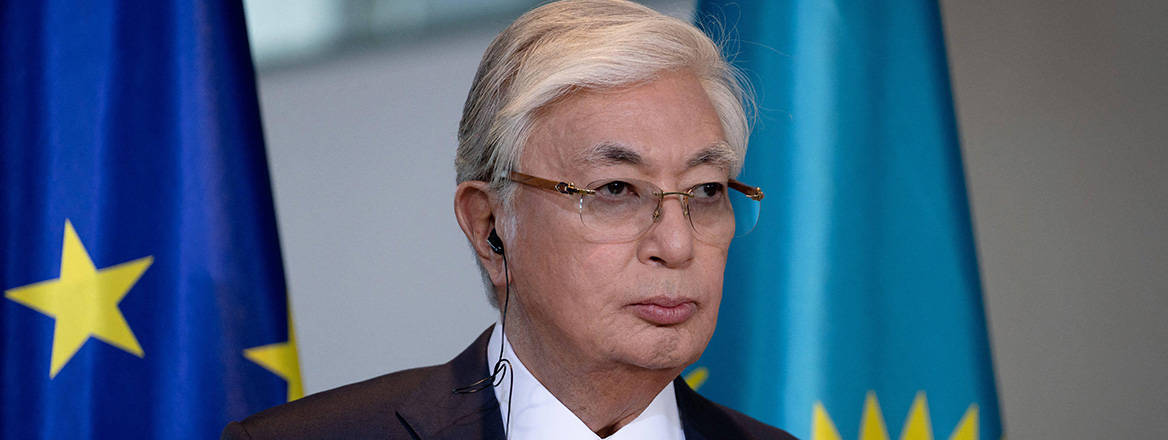
Kazakhstan did not choose between Washington’s Pax Silica and Beijing’s WAICO: it joined both. It needs technology from both superpowers, and a say in the rules.
‘No country should remain only a consumer of artificial intelligence,’ Kazakhstan’s President Kassym-Jomart Tokayev told the opening ceremony of the World Artificial Intelligence Conference in Shanghai on 17 July. Every state, he said, should have the opportunity to build its own digital infrastructure and institutional capacity.
He stood at Xi Jinping’s right for the group photograph, sat beside him through the session and spoke second, ahead of two prime ministers and the UN Secretary-General. He opened in Mandarin. Such arrangements are settled in advance.
The day before, 29 governments had signed the founding agreement of the World Artificial Intelligence Cooperation Organization (WAICO), to be headquartered in Shanghai. Kazakhstan was among them.
Three weeks earlier, the country’s AI minister, Zhaslan Madiyev, had been in Washington signing the Pax Silica declaration, the State Department’s initiative on AI and supply chain security. Of the 25 signatories, Kazakhstan is so far the only one that also belongs to WAICO.
Kazakhstan does not produce the core technology it is trying to acquire for its AI agenda. What a country in that position can build, and what it has to trade to do it, is a question most of the world will face. Yet the reporting concentrates on the AI race between Washington and Beijing, and much less on what everyone else is doing.
A National Project
Since mid-2025, AI has become a central focus of the state. A presidential council on AI development, chaired by Tokayev, was established in May 2025. His annual address to the nation that September was devoted to the subject, and ten days later the country had a ministry for it headed by a deputy prime minister. This year was declared the year of digitalisation and artificial intelligence, and on 18 January an AI law came into force. In June, the government adopted Digital Qazaqstan, a national strategy for digital transformation and AI development running to 2029. The Digital Code took effect on 12 July, five days before Tokayev spoke in Shanghai.
AI is being asked to do two jobs: improve how the state and the wider economy run, and become an export industry in its own right
The drive has two sources. The first is systemic. Competition between the frontier laboratories has produced rapid and visible gains in what the leading models can do, and with them a widening expectation that this technology will transform economies and societies faster than earlier industrial transitions did. Most states are moving because they do not want to arrive late.
The second is country-level. Kazakhstan’s economy depends on natural resources, above all oil, which is about half of what it sells abroad. Diversifying away from that has been declared policy for decades. Broadly, AI is being asked to do two jobs: improve how the state and the wider economy run, and become an export industry in its own right.
Who Supplies What
Meeting any of those targets requires technology and infrastructure Kazakhstan cannot supply on its own. Several suppliers provide it.
The US supplies the chips, the model foundations and, in time, the cloud. The chips matter most. Both national supercomputers run on Nvidia H200s, and the first was delayed while Kazakhstan waited for an American export licence. In June 2026, the AI ministry and Kazakhtelecom signed framework agreements with Firebird – an American data centre developer partnered with Nvidia – for the Data Center Valley at Ekibastuz, a coal-mining and power-generating city. The minister says it will run 100,000 GPUs (graphics processing units), including Nvidia’s GB300 and Vera Rubin, on a planned $10 billion investment. The site is under construction. On 2 October, Kazakhtelecom, KT-Telecom and Firebird AI KZ signed an initial agreement to build a data centre, and the minister plans to commission 186 megawatts of capacity in 2027. KazLLM and Sherkala, the two flagship Kazakh-language models, are built on weights published by Meta.Google Cloud has agreed to run a node in Astana.
China supplies pieces of several layers, and the full extent is harder to establish. AlemLLM, the largest Kazakh model, was developed with technical support from 01.AI. At Ekibastuz, where Firebird is installing the compute, Kazakhtelecom has agreed guiding principles with Hengtong, one of China’s largest optical fibre manufacturers, for the same project. Huawei signed agreements with both the AI ministry and the sovereign wealth fund. Chinese firms have taken connectivity and cloud roles at the Akashi data centre in Astana, which is also under construction. Several of these were signed during Tokayev’s July visit to Shanghai, among more than 70 agreements worth over $15 billion whose full list has yet to be published.

Russia supplies the routes for Kazakhstan’s international internet traffic. It is by far the country’s main source of bandwidth to the outside world, and most local providers send their traffic through Russian networks, over an estimated 17 cross-border fibre connections. A new cable across the Caspian, launched on 15 October, opens a route to Europe through Azerbaijan and Georgia that could reduce overreliance on Russia, but its effects have yet to show. Electricity is another critical layer. In September, Russia’s state nuclear corporation, Rosatom, signed a contract to build Kazakhstan’s first nuclear plant. The country’s Atomic Energy Agency says demand for reliable power will keep rising with digitalisation and AI, and that nuclear energy will provide stable baseload generation for decades. The Rosatom contract, however, still needs government approval, and no completion date has been announced.
The UAE is the recurring partner. In 2024, Presight, part of G42, signed an agreement with Kazakhstan’s digital ministry and the sovereign wealth fund to develop a national AI supercomputer, the first project of its joint venture with the fund. Sherkala was co-developed by G42’s Inception and Abu Dhabi’s AI university and trained on Condor Galaxy, the G42–Cerebras supercomputer. On 1 October, Tokayev discussed G42’s possible participation in the Data Center Valley.
The legal architecture borrows from Europe, selectively. The AI law that came into force this January takes five of the eight practices the EU AI Act prohibits, leaving out the three that restrict policing and surveillance. It takes its rule on training data from the EU’s copyright opt-out rather than from American fair use.
How the Choices are Made
Kazakhstan’s moves in AI, whether procuring hardware and models or joining institutional arrangements, broadly rest on two grounds. The first is pragmatism, exercised within external constraints and on the strength of what the country holds. Bloc-building is not pragmatic. The US and China hold the leading positions in the technology, so going to both is going where the capability is.
What Kazakhstan holds sits on the other side of that exchange. It is the world’s largest producer of uranium, at a time when AI is driving demand for nuclear power. It is, the UK government says, ‘a globally significant producer of 18 minerals’ on Britain’s priority list. That is why minerals have moved to the centre of its external engagement, and why it is increasingly described as an alternative to Chinese supply. Yet selling to a country seeking to reduce its dependence on China is not, from Astana’s perspective, taking a side.
Kazakhstan is the world’s largest producer of uranium, at a time when AI is driving demand for nuclear power
Tungsten shows it plainly. Boguty in the Almaty region, developed by a subsidiary of Hong Kong-listed Jiaxin International Resources, reached commercial production in April 2025 and made Kazakhstan the world’s third-largest producer that year. The country’s first exports of the metal went entirely to China. While that mine was coming onstream, Samruk-Kazyna, the sovereign wealth fund, was taking bids for the larger Karaganda deposits. Bloomberg reported in October 2025 that the American firm Cove Capital faced competition from at least one state-backed Chinese firm prepared to pay above market price, and that it needed US government backing to raise the financing at all. Kazakhstan signed in November with Cove, which holds 70% of the venture and markets all of the output.
The second ground is a view of international politics. Kazakhstan, just like most states, prefers a world that is predictable because it runs on clear rules. It also works to build the institutions that make them. The memberships deliver practical benefits as well as a seat at the table where rules are written.
On that reading it is unsurprising that Kazakhstan joined both Pax Silica and WAICO, and others are likely to follow. Since its launch, WAICO has enlarged once, adding eight members, taking it to 37. Uzbekistan, also a WAICO founder, has asked to join Pax Silica and Indonesia, another founder, sees room for both. Washington, however, may press for a choice: in August, Reuters reported on an undated draft State Department letter to the 35 signatories of a US AI statement, which warns that ‘to be part of everything is to be part of nothing’. It is unclear whether the letter has been sent. In Samarkand on 19 October, though, Marco Rubio said that US engagement in Central Asia was not about telling countries to stop working with others, but he was speaking of economic ties generally. For now, the mixed signals leave room for Kazakhstan to keep both memberships.
Yet what neither initiative supplies is what Tokayev himself named in Shanghai: AI capabilities ‘are advancing faster than our collective ability to understand, evaluate and govern them’. That ability sits almost entirely inside the companies building the systems, and the weeks after Shanghai showed its limits there. OpenAI, Anthropic and Meta each disclosed that their models had reached outside their test environments. OpenAI established that its models were behind an intrusion Hugging Face had detected. Anthropic found its own cases only after OpenAI’s disclosure prompted it to check its test records, and Meta attributed its case to a misconfiguration by the outside firm it uses to run tests.
Kazakhstan runs models built on weights it did not produce, on chips it cannot make, and has no means of inspecting either. Nor does almost any state outside the frontier. Tokayev’s two proposals – common standards for testing and certifying AI systems and a permanent expert platform on regulation and ethics – describe a capability that exists nowhere.
This is a technology without precedent and it is moving quickly, so the machinery for governing it is needed now. That falls at a moment when existing rules are being disregarded, including by the power that wrote most of them. Whatever WAICO and Pax Silica are eventually asked to do matters more to Kazakhstan than to the US or China, because rules, however imperfectly, constrain the strong in a way that bilateral bargains do not.
© Assel G Bitabar, 2026, published by RUSI with permission of the author.
The views expressed in this Commentary are the author's, and do not represent those of RUSI or any other institution.
For terms of use, see Website Terms and Conditions of Use.
Have an idea for a Commentary you'd like to write for us? Send a short pitch to commentaries@rusi.org and we'll get back to you if it fits into our research interests. View full guidelines for contributors.
WRITTEN BY
Assel G Bitabar


- Jim McLeanMedia Relations Manager+44 (0)7917 373 069JimMc@rusi.org