

The UK Whole of Society Defence and the Reality of Modern War

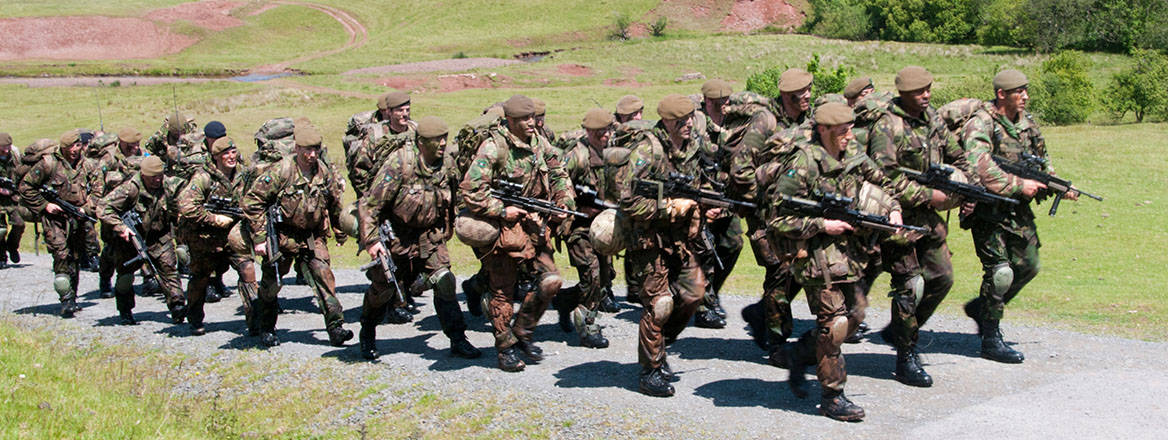
The national conversation must address society’s preparations to defend itself, reimagining the citizen solider of the 21st century, and every sector’s role in this effort.
The 2025 Strategic Defence Review concluded that ‘Defence can no longer be seen as contracted out only to our Armed Forces’ and that ‘a whole-of-society approach is essential’. However, six months later, a House of Commons Defence Committee report warned that ‘The Prime Minister’s ‘national conversation on defence and security’, highlighted in the SDR, is yet to start.’ The Chief of Defence Staff chose to focus on a whole-of-society approach in his first annual Christmas lecture, despite his remit being limited to those in uniform. For such an approach to be effective it must build on already strong foundations, be led by the Prime Minister and deliver across all government departments.
Reconnecting the Armed Forces and Society
The government acceptance of a shift from a ‘whole-of-government’ towards a ‘whole-of-society’ approach to national security is profound. Yet, to realise this ambition it must be followed by meaningful and sustained changes in attitudes and understanding of British citizens. Indeed, such are the challenges facing Britain that nothing short of a national conversation is needed to redefine how British society conceptualises its defence, understands individual civic duty and collective responsibility to confront the reality of modern warfare.
Britain’s small but highly capable armed forces enjoy remarkable public respect and confidence as the most trustworthy public institution, rated higher than the security services, the Police and Parliament. However, as the character of modern conflict increasingly transforms through technology and fast-evolving security threats, there is a need to re-examine and reimagine the military’s relationship with wider society. Until the government enables this, collective public understanding of war risks remaining remote and disconnected from reality despite the horrors of Russian aggression being plain to see in Ukraine.
Lessons from History
Cultural and personal family remembrance of the First and Second World Wars continues to shape attitudes to Britain’s Armed Forces and how citizens today think about national defence. Annual national and local services of remembrance reaffirm the universal military connection made in those conflicts across class and geography. However, the Cenotaph ceremony, local war memorial services and wearing of poppies – whilst commendable demonstrations of enduring public respect for military sacrifice – mask the fact that the public’s collective understanding of its military rests on a distant past. The First World War is chronologically closer to the Battle of Waterloo (1815) than to today, whilst the Second World War is nearer to the Charge of the Light Brigade (1854). As time continues to pass so the memories of more recent campaigns in Iraq and Afghanistan will also become increasingly distant.
Good understanding of the role and responsibilities of the armed forces has fallen in tandem with first-hand, practical knowledge of service, with both elements reducing over time as military numbers have decreased. A recent King’s College London Policy Institute paper described this as a ‘civil-military gap’ that came from ‘a lack of contact and shared experience’ between British society and its armed forces. It noted only 7% of 17-24 year olds have a member of their family serving. A Royal British Legion case study found the entire UK Armed Forces community – serving personnel, veterans and their families – only made up 6.5% of Britain’s population. By comparison, Britain’s transition to a professional force with the end of National Service in 1960 compartmentalised the demands of conflict and meant collective public understanding is today remote and disconnected from reality.
Why is it Important?
Britain faces a myriad of threats that are fundamentally different to post-Cold War expeditionary ‘wars of choice’. The conflict that the SDR is getting the UK ready to fight will be an all-domain collective defence war with Russia, a war which NATO has been preparing for since 1949. There are a range of factors that some NATO countries have either forgotten or wilfully ignored – the need for mass, the role of artillery, casualty rates – and new realities that they need to integrate: persistent surveillance, drones and autonomy. As militaries are rapidly adapting, so must societies.
Similarly, many NATO societies have little recent or institutional memory of war, which means alliance and national resilience is largely untested. HM Government reports of Grey Zone activity and media coverage of Russian hybrid aggression ‘mounting in Europe’ are now persistent. The recent cyber-attack against Jaguar Land Rover, which cost an estimated £1.9 billion and contributed to a UK GDP slowdown in the third quarter of 2025 demonstrates how external threats can have severe internal impacts. Despite rising hybrid attacks across Europe which increasingly affect the functioning of societies, it is unclear exactly how the British public might react to a major attack.
In a recent Parliamentary debate it was argued that ‘the UK is closer to the reality of war than it has been at any time in the last 60 years, and we are woefully unprepared for conflict’
National resilience and homeland defence depends upon it. An informed and prepared British public is vital beyond just being better able to mobilise as a military reserve – it is the foundation of societal perseverance. Effective defence is not about putting everyone in uniform – it is about being able to cohere the full range of society’s capabilities to respond when a threat emerges. When cyber criminals opportunistically or purposefully provide cover for hostile state attacks, when fundamentalist terrorists exploit chaos to strike at population centres, the entire nation becomes the frontline. General Sir Patrick Sander termed it a ‘Polycrisis’ where Britain needs to be prepared ‘to deal with multiple crises simultaneously’. Yet government has a poor track record of enabling whole-of-government responses to crises and this must first be improved as a precursor to developing a whole-of-society approach.
In a recent Parliamentary debate it was argued that ‘the UK is closer to the reality of war than it has been at any time in the last 60 years, and we are woefully unprepared for conflict’. The same debate emphasised that ‘grey zone aggression is already threatening our daily lives’ through daily cyberattacks, Russian maritime encroachment and disinformation campaigns. With the trajectory of Russian aggression increasing, there is significant potential for war to break out in Europe before the UK is ready. Without understanding, defence will perpetually compete unsuccessfully against health, education and welfare with more immediate voter salience.
Ultimately, ‘societies, industries and economies win wars’ and Britain’s needs to ‘be prepared for the scale of war our grandparents or great-grandparents endured’. A national conversation must confront uncomfortable realities about Britain’s vulnerability and society’s role in national defence. Especially when you consider that a full-scale industrial war will likely be long and almost certainly demand ‘second and third echelon troop reinforcements’ that will have be drawn from British citizens. This will test how well prepared they have been and the British government cannot assume people will just show up when told if they have not been prepared.
Civil society’s contribution to defence and national resilience is much broader than security responses. Transport workers will be needed to maintain critical logistics, healthcare professionals to maintain the NHS and treat mass casualties and technology must protect critical national infrastructure and telecommunication networks. However, all of these vectors of attack include physical infrastructure which are housed across the UK and will need protecting. A whole of society response draws on every sector and depends upon individual citizens remaining vigilant without succumbing to panic, despair or division.
Building on Strong Foundations
The British military consistently ranks amongst the nation’s most trusted institutions and is a strong foundation upon which to build deeper public engagement. The public’s comfort with Britain’s expeditionary role reflects confidence in professional armed forces’ judgment and capability, an asset other nations such as France, Germany and Japan do not enjoy. The armed forces are also actively transforming to better reflect modern Britain and remain a powerful engine of social mobility. Women serve across all roles, bringing diverse perspectives and capabilities that strengthen operational effectiveness, whilst ethnic minority representation continues to improve through targeted outreach and inclusive culture initiatives. Full LGBTQ+ inclusion demonstrates the military’s ability to evolve while maintaining operational excellence. These changes are not symbolic – research increasingly shows that cognitive diversity drives innovation, problem-solving, and adaptability, precisely what modern operations demand.

Help your search results show more from RUSI. Adding RUSI as a preferred source on Google means our analysis appears more prominently.

Stay up to date with the latest publications and events with the International Security Research Group

Challenges around recruitment and retention reflect broader societal trends as a taut job market, changing career expectations and competition for technical skills means attracting talent is competitive. However, young people are still seeking meaningful work aligned with values. The armed forces offer exactly this: purpose-driven careers tackling consequential challenges in service of something more than the individual. The challenge is articulating this proposition effectively and removing barriers to service.
However, this association is not automatic and must be incubated. Younger generations associate the UK armed forces with failures in Iraq, Afghanistan and Libya – with NATO similarly tarnished by the latter two – rather than the Cold War bulwark against Soviet aggression that previous generations associated with the Alliance. Therefore, the UK needs to do much better at selling the value of the military and the NATO to the defence of the country and must confront the legacies of post-Cold War interventions to prevent anti-military counter-narratives which will be fuelled by Russian disinformation.
Running Out of Time
Politicians and senior military commanders consistently express confidence that the British people – including younger generations often dismissed as unwilling or unprepared – will rally when threats materialise. However, this faith cannot substitute for preparation. History shows that even modest peacetime organisation and training programmes yield disproportionate dividends during crises, channelling good will into effective action. The gap between a population willing to help and one capable of helping effectively is bridged through accessible public training, clear engagement frameworks and understanding of how their skills fit into broader defence and resilience strategies. The question is not whether the British public will rise to the occasion, it is whether they will be properly equipped to do so effectively, ahead of time.
© RUSI, 2026.
The views expressed in this Commentary are the authors', and do not represent those of RUSI or any other institution.
For terms of use, see Website Terms and Conditions of Use.
Have an idea for a Commentary you'd like to write for us? Send a short pitch to commentaries@rusi.org and we'll get back to you if it fits into our research interests. View full guidelines for contributors.
WRITTEN BY
Ed Arnold
RUSI Senior Associate Fellow, International Security


Major Laurence Thomson
Former Chief of the General Staff's Visiting Fellow

- Jim McLeanMedia Relations Manager+44 (0)7917 373 069JimMc@rusi.org