

Sanctions are a National Priority but Where is the Data to Prove It?

The UK and the EU insist that sanctions remain atop their security agendas, but current enforcement levels provide little evidence to support that claim.
The term ‘unprecedented’ has become a trigger word for those working in international sanctions since February 2022. Russia’s full-scale invasion of Ukraine was met with one of the largest coordinated regulatory responses in recent history, as G7 partners adopted a raft of restrictions across finance, technology, energy and other sectors. However, while the scope of these sanctions, or restrictive measures in EU parlance, has continued to expand through 21 EU sanctions packages, the level of enforcement has not reflected a similar degree of commitment.
Tracking enforcement across the EU is no easy feat. Sanctions are adopted centrally at the EU level, but enforcement remains a national prerogative, producing wide variations in effort across Member States and lacking a central public reporting of investigations, fines or convictions. The UK, on the other hand, has the edge on transparency, having published a cross-government sanctions enforcement review in May 2025 and a strategic approach to sanctions enforcement in March 2026.
These efforts to assess and strengthen its enforcement regime show that the UK government recognises the need to enhance its capabilities. Unfortunately, its enforcement record still points to a different picture. Investigations and case-building take time, but the limited number of enforcement actions and especially the low value of monetary penalties imposed and the relatively trivial and technical nature of the breaches that have been punished hardly allow the UK to lead by example – but there may be some recent indications of improvement.
The UK Sanctions Enforcement Architecture
The UK’s sanctions enforcement architecture is spread across a network of departments and agencies, with responsibility divided according to the type of restriction and whether a breach results in civil or criminal action.
Financial sanctions fall primarily to HM Treasury’s Office of Financial Sanctions Implementation (OFSI), established in March 2016. OFSI oversees their implementation, monitors compliance, investigates suspected breaches and can impose civil monetary penalties. OFSI also issues licences permitting activity that would otherwise be prohibited where the relevant regulations provide an applicable licensing ground. Suspected criminal breaches can be referred to law enforcement, with the National Crime Agency leading criminal enforcement.
These latest fines raise the prospects regarding OFSI’s willingness and capacity to issue significant penalties that send a chilling effect across industry
Responsibility for trade sanctions is split across several agencies. Within the Department for Business, Innovation, Science and Trade, the Export Control Joint Unit administers export controls and licences exports of goods, software and technology. The Office of Trade Sanctions Implementation (OTSI) was established in October 2024 to lead the civil enforcement of sanctioned services and overseas trade in sanctioned goods and technology where a UK person is involved. HM Revenue and Customs (HMRC) enforces restrictions on goods crossing the UK border and leads criminal investigations into suspected trade sanctions breaches, including serious cases referred by OTSI.
Low Number of Low-Volume Fines
OFSI’s first enforcement action came in January 2019, when Raphaels Bank received a monetary penalty of £5,000 for dealing with funds belonging to a person designated under sanctions relating to the misappropriation of Egyptian state funds. OFSI had initially assessed a penalty of £10,000 but reduced it by half because the bank voluntarily disclosed the breach and cooperated with the investigation.
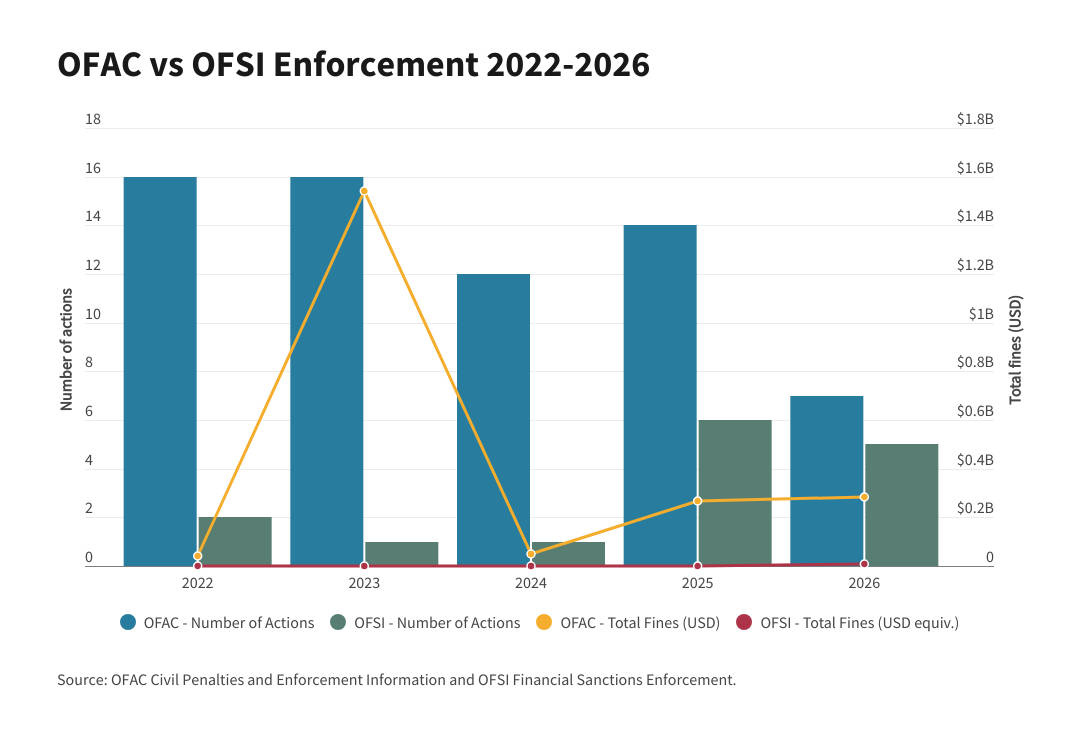
This first case foreshadowed the enforcement pattern that would follow: a company voluntarily disclosed its own breach and received a discounted, low-value penalty. Of the 21 enforcement actions that OFSI has concluded to date, 11 resulted in either no monetary penalty or one of £50,000 or less. Seven attracted penalties above £50,000 but below £500,000, while only three exceeded £1 million. 13 of the 21 actions followed voluntary self-disclosures.
This pattern suggests limited proactivity in investigations, or at least limited success in turning investigations into public enforcement outcomes. It also stands in stark contrast to enforcement in the US by the Office of Foreign Assets Control (OFAC), both in the number of actions and the value of monetary penalties.
A landmark £20.47 million fine was imposed on Standard Chartered in February 2020, which remains the largest issued by OFSI. The British bank made over a hundred loans worth hundreds of millions of pounds to DenizBank between April 2015 and January 2018. At the time, DenizBank was almost wholly owned by Sberbank and was consequently subject to the EU restrictions imposed on its Russian parent.
The action stood out among the predominantly low-value fines, yet the broader pattern did not change after February 2022. Only in 2026 has OFSI imposed two consecutive penalties exceeding £1 million against UK-based companies.
A New Trend in 2026?
In June, OFSI announced a penalty of just over £1 million against Sabre Global Technologies Limited (SGTL), a technology firm that repeatedly breached UK financial sanctions. This was OFSI’s first monetary penalty involving the circumvention prohibition. SGTL continued providing services to Russian carrier Ural Airlines for seven months after it was designated by the UK in May 2022.
After its UK bank froze payments because of sanctions concerns, SGTL explored alternative ways to receive money from Ural Airlines. It arranged a $200 test payment to a US bank account, intending to route future settlements through that account if the payment succeeded. OFSI assessed the total value of the breaches at £2.63 million and classified the case as ‘most serious’, citing the attempted circumvention, the continued provision of services after the sanctions risk had been identified and the direct provision of an economic resource to a designated person. OFSI calculated a baseline penalty of £1.25 million before applying a 20% discount for SGTL’s voluntary disclosure and settlement.
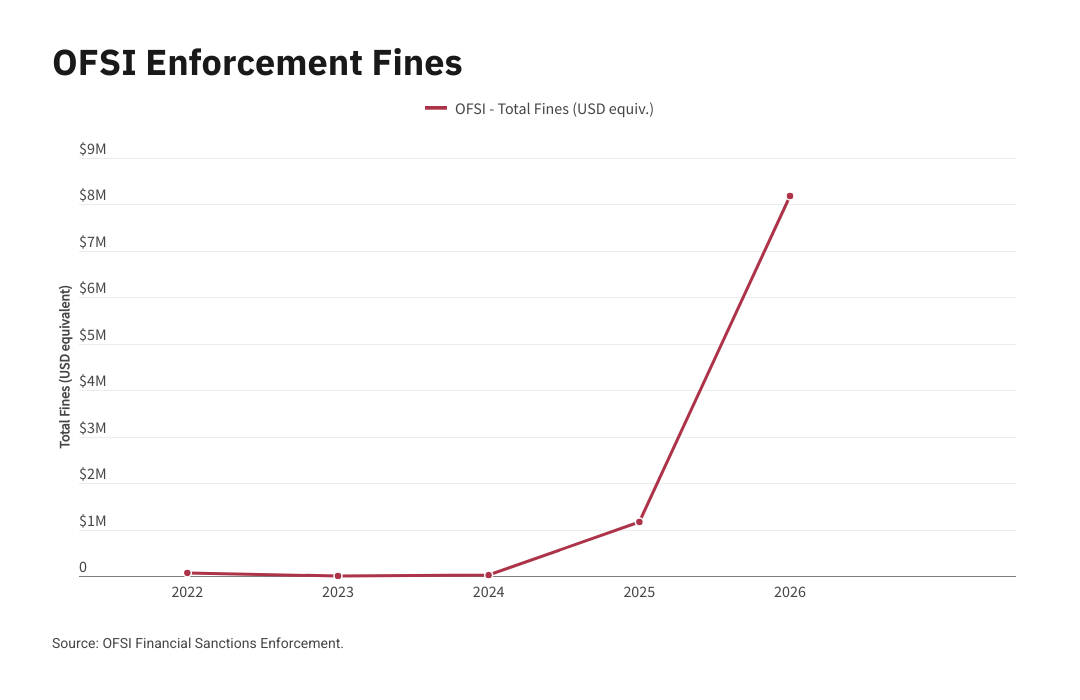
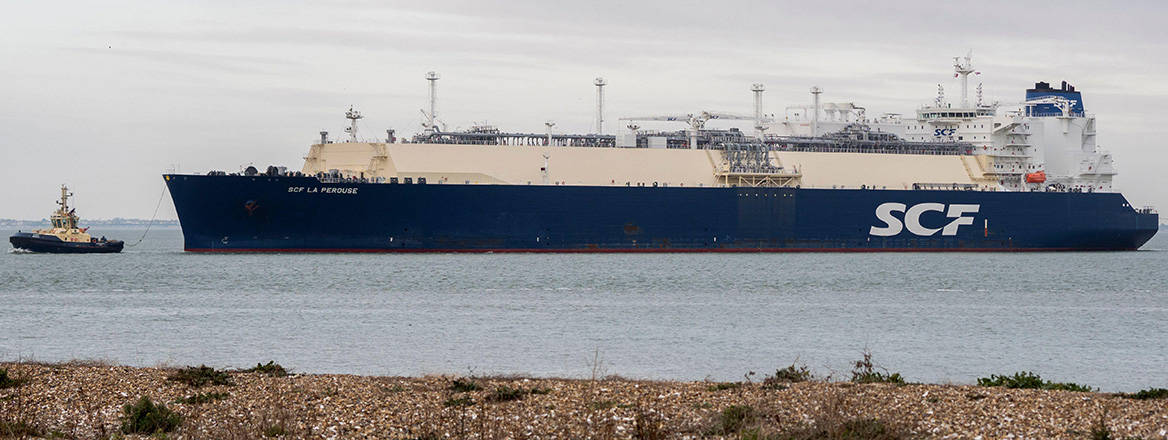
In September, OFSI announced a £4.73 million penalty against Citibank’s London branch for processing almost 1,000 payments worth £19.72 million in breach of UK sanctions. The breaches, which occurred between February 2022 and July 2025, involved accounts and payments linked to companies owned or controlled by Russia’s largest shipping company, Sovcomflot, and Russian banks including Alfa-Bank, Gazprombank and Credit Bank of Moscow. Most of the breaches happened between February and November 2022, in the months immediately after the full-scale invasion. Due to the self-disclosure and cooperation, OFSI applied a 20% discount to the baseline penalty.
These latest fines raise the prospects regarding OFSI’s willingness and capacity to issue significant penalties that send a chilling effect across industry. Some other examples, although low-volume, further point to OFSI’s disposition to heighten compliance expectations for UK businesses.
In March 2025, OFSI made use of its disclosure enforcement powers against three charities that were named (and shamed) under the UK’s Counter-Terrorism International sanctions regime who failed to respond to requests made pursuant to OFSI’s information-gathering powers. The first such disclosure notice was issued in August 2023 against Wise for breaching Russia sanctions.
But it was in April 2025 when OFSI imposed its first-ever monetary penalty for an information offence relating to financial sanctions regulations. Svarog Shipping & Trading Company Limited, a UK-registered company, was fined £5,000 for failing to respond to a statutory Request for Information (RFI) within the specified timeframe and failing to provide a reasonable excuse for the delay. Though OFSI concluded that Svarog had not breached financial sanctions, it concluded that the failure to respond to the RFI was a breach and chose to impose the penalty, showcasing a willingness to demonstrate greater resolve.

The progress with enforcing trade sanctions follows a similar pattern. In July, HMRC released its enforcement statistics in a technical note. During 2025–26, it recorded 22 ongoing criminal investigations, three positive charging decisions covering two cases awaiting trial, 58 seizures of sanctioned goods and one compound settlement worth £1.16 million. HMRC also received 29 voluntary disclosures, which resulted in 18 warning letters, seven no-further-action letters and one compound settlement, while three remained under review.
OTSI’s first annual figures reflect an office still building its capacity. It received 178 suspected breach reports or referrals and closed 104 cases during 2025–26, including 40 referred to HMRC. However, only around 6% of the cases it opened were initiated proactively and it has yet to impose a civil monetary penalty, although it reported that a substantial number of investigations had reached an advanced stage.

However, HMRC took an important step towards greater transparency in June when it named a company that had accepted a compound settlement for a sanctions breach for the first time. Until then, HMRC had favoured anonymity in its enforcement actions, blunting their deterrent and educational impact by limiting the information available to industry about the offenders and conduct involved. Petrofac Facilities Management Limited paid a £569,157 compound settlement for supplying sanctioned industrial goods to persons connected to Russia and providing related technical assistance. HMRC sustained this move towards transparency in September when it published a £7.44 million compound settlement with Illumina Cambridge Limited, the largest sanctions-related settlement published to date. However, despite this positive step, it is worth noting that both cases were a result of voluntary self-disclosures.
Long Road Ahead
The direction of travel in 2026 is encouraging, particularly when compared with the EU. More than a year after the deadline for transposing Directive (EU) 2024/1226, several Member States are still adapting their laws to criminalise sanctions breaches consistently. Some continue to lack comprehensive enforcement frameworks capable of investigating every category of breach, imposing effective penalties or supporting complex cross-border investigations.
The UK therefore enters this next phase from a stronger institutional position, but with plenty of work to do. It should use its advantage to sustain the momentum seen in 2026 through more proactive investigations and penalties commensurate with the seriousness and value of breaches. If sanctions truly are a national security priority as often hailed in political narratives, the enforcement data must finally prove it, and the private sector must be given reason to fear OFSI, OTSI and European enforcement action as much as they fear OFAC.
© RUSI, 2026.
The views expressed in this Commentary are the author's, and do not represent those of RUSI or any other institution.
For terms of use, see Website Terms and Conditions of Use.
Have an idea for a Commentary you'd like to write for us? Send a short pitch to commentaries@rusi.org and we'll get back to you if it fits into our research interests. View full guidelines for contributors.
WRITTEN BY
Gonzalo Saiz Erausquin
Research Fellow
Centre for Finance and Security


- Jim McLeanMedia Relations Manager+44 (0)7917 373 069JimMc@rusi.org