

NATO’s Rutte is Doing a Tough Job. Europeans Should Help

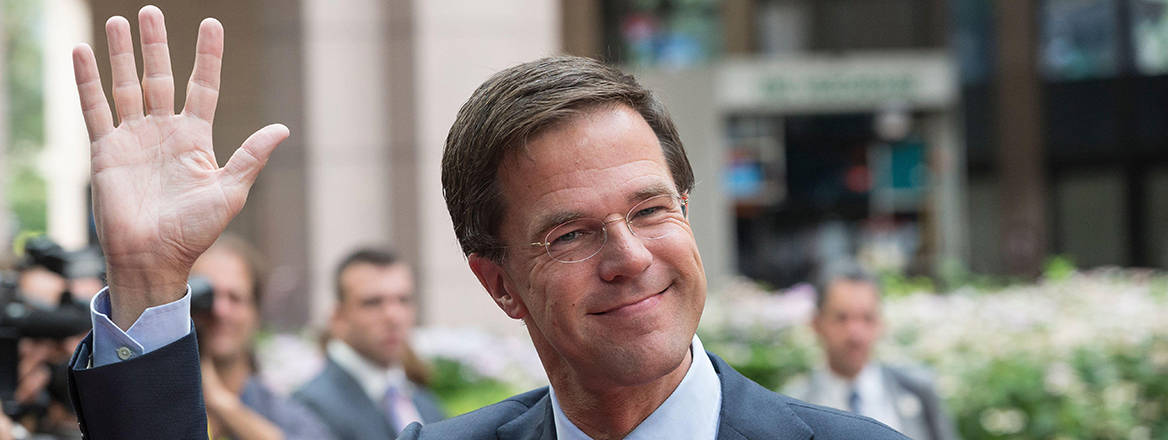
Mark Rutte has come under attack for demeaning NATO, going beyond his remit and being ultimately ineffectual. Rutte is actually doing his job. And as he meets Trump this week, European allies could do more to help.
It is no surprise that the NATO Secretary General meets with the American President ahead of the next summit of the alliance, scheduled for 7-8 July in Ankara. Mark Rutte’s visit to Washington, DC, while long planned, comes at perhaps the most dangerous point since NATO was founded in April 1949, and in the dark shadow of the war in Iran.
A Paper Tiger?
Since the start of his war of choice in the Middle East, President Trump has repeatedly voiced his frustration and even fury with NATO allies for their reluctance to help secure the Strait of Hormuz, calling them ‘cowards’. On 1 April, he griped about British Prime Minister Sir Keir Starmer and the state of the British armed forces in an interview with The Telegraph and went on to claim that US membership in the alliance was ‘beyond reconsideration.’ ‘I was never swayed by NATO. I always knew they were a paper tiger, and Putin knows that too, by the way,’ Trump said – as if the US was not the leading member of the alliance and Russia was not America’s adversary.
Secretary of State Marco Rubio echoed Trump’s comments. ‘We’re going to have to re-examine the value of NATO and that alliance for our country,’ Rubio said. ‘If NATO is just about us defending Europe if they’re attacked, but them denying us basing rights when we need them, that’s not a very good arrangement. That’s a hard one to stay engaged in,’ said Rubio.
Yet many of his former colleagues in the US Senate were quick to recall that an American president cannot unilaterally withdraw from NATO, not least due to a 2023 bipartisan bill drafted by then-Senator Rubio. The Senate majority leader John Thune called NATO a ‘very critical, incredibly successful alliance,’ adding that ‘in the world today, we need allies.’
‘A Wonderful Guy'
The pushback from the Senate may have tempered Trump’s stance – up to a point. On 1 April, he did not revert to NATO, as had been widely trailed, in a national address on the Iran war. In a rambling press conference on 7 April, he repeated his criticism of NATO allies, but seemed to dilute it by also complaining about other treaty allies in the Indo-Pacific – South Korea, Japan and Australia – that did not jump to his help.
However, at the end of the press conference on Iran, he suddenly mentioned Greenland, reviving European concerns about his territorial ambitions. ‘It all began, if you want to know the truth, with Greenland. We want Greenland. They don’t want to give it to us. And I said bye-bye!’ Trump said, as he was heading to the exit.
Trump also indicated that Europeans may consider providing more help, in a possible reference to the emerging coalition of the willing that the UK and France have been trying to put together with over 40 nations to keep the Strait of Hormuz open. ‘They’re going to say, “Oh, we’ll do this. We’ll do that.” Now they all of a sudden want to send things.’ He mentioned he was going to meet Mark Rutte, whom he described as ‘a wonderful guy.’ ‘The Secretary General is great,’ Trump said.
A Little Bit Muted
The main job of the Secretary General is to keep the alliance together. That means engaging with the leaders of all 32 allies, regardless of their political orientation or his personal preference. Most of all, it means keeping the US on board. That is a tough balancing act, which demands significant political skills, but may not always appear graceful.
Mark Rutte is now one of the few European leaders, perhaps the only one, with whom President Trump speaks on a regular basis and whom he praises publicly. According to diplomats, Trump sometimes calls him several times a day.
Through crisis after crisis, Rutte has kept his cool and his boyish grin, while perfecting his method: lavish praise on Trump publicly, while working behind the scenes to find an off-ramp reflecting NATO’s collective interest. As transatlantic crises have multiplied and his tone has become more obsequious, Rutte’s approach has met increased criticism, in particular from France after the NATO Secretary General warned the European Parliament that the continent could not defend itself without America.
‘I hear the criticism, obviously, I’m not deaf,’ Rutte told Reuters. ‘As you know, when there are debates between allies, I always try to stay a little bit muted and therefore being a little bit able if necessary to help a bit.’
This encapsulates Rutte’s ability – shared with his predecessor Jens Stoltenberg, but otherwise rare among politicians – to show humility in order to reach a pragmatic solution. If Rutte aimed for a headline-grabbing quote or engaged in a rhetorical battle with Trump, that would not be doing his job, but further undermine alliance unity.
Instead, by working behind the scenes, he has managed to defuse previous disputes triggered by Trump. At last year’s NATO summit in The Hague, he achieved consensus on reaching 5% of GDP on defence, a target which strengthens the alliance but previously would have seemed unimaginable. He then devised a compromise solution, called PURL, under which Ukraine can continue to receive US equipment bought by European allies. And on Greenland, bolstered by a united stance by Europeans, he convinced Trump to ditch his threat of tariffs and to launch Arctic Sentry, a new NATO mission for the High North.
Quiet Help
But despite his best efforts, Rutte’s job is not getting any easier. President Trump reportedly threatened to stop supplying weapons for Ukraine in order to pressure European allies to reopen the Strait of Hormuz. Quickly working the phones, Rutte urged a group of countries including the UK, France and Germany to issue a statement expressing readiness to contribute. Over the last weeks, that potential coalition has expanded to over 40.
Rutte’s meetings in Washington this week may be the toughest in his long political career. He has to ease transatlantic tensions ahead of the Ankara summit, to ensure that the flow of US arms and intelligence to Ukraine does not entirely stop and to restate why Europe remains vital to US national security.
In fact, one of the lessons of operation Epic Fury is that the ability of the US to project power abroad relies on Europe for basing, overflight permission and intelligence cooperation. Europe still hosts around 80,000 American troops and some 40 bases. And despite Trump’s claims and statements by many European politicians that ‘this is not our war,’ many NATO allies are quietly doing their part, including Germany, Greece, Italy, Portugal, Romania and the UK.

Help your search results show more from RUSI. Adding RUSI as a preferred source on Google means our analysis appears more prominently.
Spain, which also opposed the 5% target last year, remains the biggest exception. Prime Minister Sánchez’s socialist party has gained in the polls after he closed Spanish airspace to US planes involved in the strikes and banned them from using jointly operated bases. But Lithuanian analysts and other eastern Europeans worry that, four years into Russia’s war in Ukraine, NATO’s eastern flank would bear the greatest cost of tit-for-tat rhetoric leading to a weakening of America’s role in Europe’s security.
While the Ankara summit is supposed to focus on showing that NATO allies are on track to invest more and to speed up defence industrial production, it would seem strange if the issue of the Middle East is ignored, not least in view of Turkey’s attempts to play a mediating role in the region. Secretary General Rutte could suggest putting stabilisation in the Middle East on the summit agenda to showcase support for the US by inviting Ukraine as well as partners from the Gulf and the Indo-Pacific to contribute.
This is not Europe’s war, but it does affect Europe’s security, so NATO’s European members cannot just stand on the side-lines. Ensuring freedom of navigation is in their interest, as is preventing Russia from using high oil prices to replenish its war coffers. For many years, NATO has condemned Iran’s nuclear and ballistic missile programmes and its destabilising role in the region. And in recent weeks, NATO’s ballistic missile defence system has successfully intercepted four Iranian missiles heading towards Turkey.
Will Rutte’s approach prove effective again, and for how long? Time will tell. In a way, that is the point. By working hard behind the scenes to find pragmatic solutions amid eroding trust, Rutte is hoping to buy enough time for allies to become militarily stronger and for NATO to become a more European alliance in the years to come.
© RUSI, 2026.
The views expressed in this Commentary are the authors', and do not represent those of RUSI or any other institution.
For terms of use, see Website Terms and Conditions of Use.
Have an idea for a Commentary you'd like to write for us? Send a short pitch to commentaries@rusi.org and we'll get back to you if it fits into our research interests. View full guidelines for contributors.
WRITTEN BY
Oana Lungescu
RUSI Distinguished Fellow; RUSI Europe Advisory Board Member


- Jim McLeanMedia Relations Manager+44 (0)7917 373 069JimMc@rusi.org