


The UK believes in a whole-of-society approach to national security. Agriculture has both a traditional and a novel role to play in protecting the country.
In 2024, the UK's total agricultural labour force was 452,900 or 1.3% of the total workforce, spanning 209,000 farm holdings across 69% of the land in the UK. UK Farming is the only part of the national food system – including imports, trade and supply chains – that the government can control when geopolitical crises create perilous vulnerabilities. An estimated 5 million Ukrainians are facing food insecurity within the country and internationally the war has created wider global shocks in the food, fertiliser and energy markets. Similarly, the Covid-19 pandemic severely impacted global supply chains and created domestic food shortages. Meanwhile, climate adaptions are already impacting domestic food production in the UK, which UK defence chiefs have warned about for two decades.
UK agriculture produces approximately 62% of the total food consumed domestically. If war with Russia breaks out – which NATO assesses likely by 2030 – the other 38% of food production would be placed at risk, requiring a rapid increase in domestic production to feed the country. Therefore, maintaining a stable rural economy and introducing – and testing – surge capacity will increase resilience and contribute to a whole-of-society approach to war preparation. Moreover, the farming sector has additional value and skills to protect the nation and is largely an untapped resource which the UK government should mobilise.
Enabling Food Security
UK food self-sufficiency peaked in 1984 at around 78% but has steadily declined since, stabilising in the last decade at approximately 60-65%. The Soviet Union deliberately targeted food supplies and the Russian Federation is no different. Therefore, arresting this decline should be a priority but this decline is predicted to worsen. The All-Party Parliamentary Group on Science and Technology in Agriculture recently reported that UK agriculture is at a tipping point and that the UK risks losing almost a third of its food production capacity by 2050 unless urgent reforms are made. If the government waits until war breaks out, it will already be too late and so it must develop and test surge capacity plans continuously to have the confidence that it can feed the nation in a crisis.
Finland – universally recognised as an exemplar for a whole-of-society approach to security – regards farming as the backbone of its food system and critical for national security. Its National Emergency Supply Agency manages a strategic grain reserve system to sustain the population for nine months in a crisis and an efficient agriculture sector delivers a self-sufficiency rate of 80%. Moreover, public-private partnerships enable joint contingency plans and exercises which are routine and so preparedness is not considered a policy, but the natural way of doing business.
Any government effort to increase food production would also count to the NATO 1.5% target of GDP on resilience and security related spending and therefore benefit multiple governmental departmental priorities
Similarly to replenishing ammunition stockpiles, the UK government should create a grain reserve system, and the demand is already present. Food insecurity already exists in the UK – partly caused by rising inflation and the cost-of-living crisis precipitated by the war in Ukraine – with 14 million Britons facing food poverty, including a third of children under five who cannot access healthy and nutritious food, having broader impacts on development, education and attainment. Thus, it is not only a matter for crises and testing efficient ways to ramp up production for resilience, but can provide an excess so those in need enjoy a broader benefit.
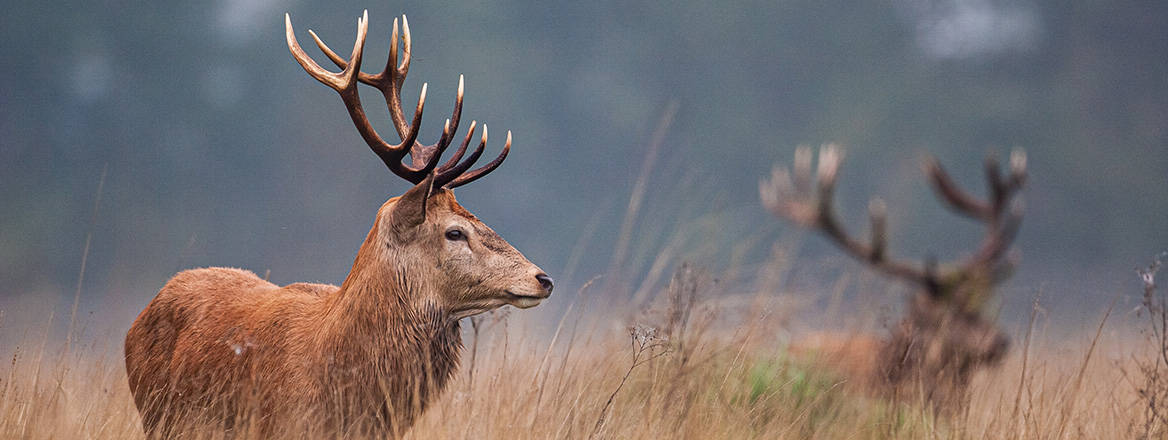
A quick win would be to increase game into the UK food system. Government figures suggest that the total deer population of the UK is over 2 million (some deer managers assess that there could be as many as five times this) across the six naturalised species which collectively represent a ready supply of lean, sustainable and healthy meat. Cull numbers are already increasing to support the management of growing deer populations – which damage trees, prevent forest regeneration and reduce plant and animal diversity, with a significant financial impact to land and crops. Deer are so prevalent that they might even undermine the UK government 2050 net zero target A government backed scheme could reinvigorate the rural economy between stalkers, game dealers and butchers. Moreover, some schools in Scotland have already introduced venison into school meals. Changing legislation to create emergency open seasons on the different sexes and species of deer would allow the rapid increase of venison production. Any government effort to increase food production would also count to the NATO 1.5% target of GDP on resilience and security related spending and therefore benefit multiple governmental departmental priorities.
The Threat to the UK Homeland
There is no expectation of Russian armour rolling through UK towns and cities but that does not mean there is no domestic threat to UK infrastructure. In 2024, MI5’s state-based investigations rose 48%, with Russia’s GRU on a ‘sustained mission to generate mayhem’ within the UK, including through ‘sabotage, arson and more’, as the Kremlin adapts to the extensive expulsion of agents following the 2022 invasion of Ukraine. Russia is also comfortable with using proxies, recruited via social media and paid in cryptocurrencies, to do its bidding. Five men were recently convicted of a Russian-ordered arson attack in London on a warehouse hosting supplies destined for Ukraine.


In war, no sites are safe. The UK defines 13 Critical National Infrastructure sectors (including food) which all have supporting physical infrastructure in need of protection – particularly power generation, which feeds through to all other sectors. Several UK strategic assets are based in rural areas, such as the UK’s nuclear deterrent in Faslane and a significant element of NATO’s maritime patrol capability in RAF Lossiemouth – both in Scotland. There are eight nuclear power stations in the UK (and approximately 70 gas and 200 hydroelectric stations) and softer enabling targets, such as data centres in rural villages and logistics hubs – such as Amazon warehouses – are all vulnerable and important to the national effort.
On 9 November 2025, five drones were seen flying over Belgium’s Doel nuclear power plant with the UK, France and Germany sending assistance. It follows that Russia does not need to use its cruise and ballistic weapon capabilities to target the UK, as it can sabotage sites in the UK, causing havoc, to paralyse political and operational decision making. Poland has recently announced up to 10,000 soldiers will be deployed under Operation Horizon to protect infrastructure in response to sabotage on its rail network. The UK simply does not have those resources and so the government needs to be creative.
The 2025 Strategic Defence Review recommended the development of a new Home Defence Force to protect Critical National Infrastructure and other sensitive sites. However, six months later a House of Commons Defence Committee report warned that:
‘The UK lacks a plan for defending the homeland and overseas territories, with little progress on the Home Defence Programme. The Prime Minister’s ‘national conversation on defence and security’, highlighted in the SDR, is yet to start.’
Even if 50% of [deer stalkers] could be mobilised to support homeland defence, that would still represent a force of 69,000 – approximately the size of the full-strength regular British Army today
The government should consider the unique and valuable skills that country sportsmen and women possess to underpin homeland defence and fill the obvious gaps.
Country Skills
An assessed 553,000 people in the UK shoot either professional or recreationally, with a quarter of these deer stalkers (138,250). Similarly to the military, they will be of varying age, fitness and levels of experience. However, even if 50% of this group could be mobilised to support homeland defence, that would still represent a force of 69,000 – approximately the size of the full-strength regular British Army today. Such a group could be trained and mobilised quickly, arguably has more appropriate skills and experience and critically would free up Army resources to deploy to Europe. The other 50% of stalkers can be tasked with increasing the deer cull and food production, providing dual benefits for the following reasons.
First, stalkers and shooters are regionally based and have deep understanding of and connection to the local area, and may be able to provide intelligence on hostile reconnaissance. Indeed, the greatest strength of mobilising this group is that they would be tasked with defending their own areas, family livelihoods and farms, providing great purpose and incentivisation for a group with a typically strong patriotic sentiment.
Second, databases already exist through the Police Forces, who grant firearms certificates and shotgun licences. Therefore, this group could be brought into a regional police command quickly, if the right powers were granted. Alternatively, British Army command could be delivered through the extant Defence Deer Management (DDM) service – a voluntary organisation of serving and retired military and civil servants who manage the deer on the 341,400 hectares, or 1.4% of the total UK land mass, that the MoD owns or has rights over – which is structured regionally and hosts a training programme. Moreover, veteran initiatives such as Artemis Rural Management that aim to get veterans into deer management in recognition of the transferable skills, would also be able to provide command and management support.
To own firearms in the UK a GP medical, police interview and home visit are already required, forming the basis of security checks for access to sensitive sites. Ukraine’s Territorial Defence Forces (TDF) form a key component of its national resistance system, and is a useful model for integrating military and civilian efforts for regionally organised local defence.
Third, this group has many transferable skills such as firearms training, marksmanship, camouflage and concealment and reconnaissance – often now including the use of drones and thermal imagery – and many will have their own equipment, meaning there is a minimal training requirement. Indeed, historically, field sports and the military have a close association, especially in reserve units such as the Royal Wiltshire Yeomanry. Perhaps the most famous sniper of all time, Simo Häyhä - known as the ‘White Death’ – credited with 542 Soviet kills in the 1939-40 Winter War, was a Finnish farmer before and after the war.
Fourth, following the recent presence of drones over Copenhagen airport, the UK Defence Secretary is planning to provide soldiers with more permissive powers to shoot down drones over military bases. In Ukraine, shotguns are highly effective in the counter Unmanned Aerial Vehicle (UAV) role, and NATO militaries, including the French Army and UK military, are training this capability. Professional and recreational shotgun users could easily perform this role with limited risk.
Innovation is not just about technology but about doing things differently . . . Developing a ‘whole-of-society’ approach to national security is not a process, but a cultural change which is to be constantly improved, not technocratically ‘delivered’.
Policies to free up police and army resources during crises already exist. Operation Temperer is the standing order to allow military support to the police in extreme national emergencies. Enacted in 2017, in response to terrorist attacks in London and Manchester, it allowed the police to deploy in greater number onto Britain’s streets. In a war with Russia, the demands on law enforcement would significantly increase, and all military personnel will be needed elsewhere, so deploying other resources must be considered.
Engaging Farmers
These proposals are not without risk. However, risk profiles will spike dramatically during war. Furthermore, innovation is not just about technology but about doing things differently. Exploring these options could maximise resources available to NATO and enhance resilience through protecting vulnerable infrastructure. Developing a ‘whole-of-society’ approach to national security is not a process, but a cultural change which is to be constantly improved, not technocratically ‘delivered’.
Tasking landowners to protect the country is an obvious start and the Secretary of State for Environment, Food and Rural Affairs is already on the National Security Council (Resilience) sub-committee, which could form the correct structures quickly by considering three elements.
First, the relationship between farmers and the government has broken down over the ‘farmers tax’. The government should consider alternative measures, not on economic, but national security grounds. Second, the Home Office must get actively involved and rethink proposed changes to shotgun licencing and become proactive in considering how the agricultural sector can be a force multiplier. Finally, the SDR also promised a Defence Readiness Bill to provide ‘additional powers in reserve to support the mobilisation of industry and Reserves’. Pre-emptive legislation to enable emergency powers will be required and agricultural laws are often archaic and differ between the four constituent nations of the UK. These are dangerous times and to mirror the language used in the recent budget – everyone must play their part.
© RUSI, 2026.
The views expressed in this Commentary are the author's, and do not represent those of RUSI or any other institution.
For terms of use, see Website Terms and Conditions of Use.
Have an idea for a Commentary you'd like to write for us? Send a short pitch to commentaries@rusi.org and we'll get back to you if it fits into our research interests. View full guidelines for contributors.
WRITTEN BY
Ed Arnold
RUSI Senior Associate Fellow, International Security


- Jim McLeanMedia Relations Manager+44 (0)7917 373 069JimMc@rusi.org