

Energy Security Lessons From the Oil Crises — And Nuclear Power’s Strategic Return

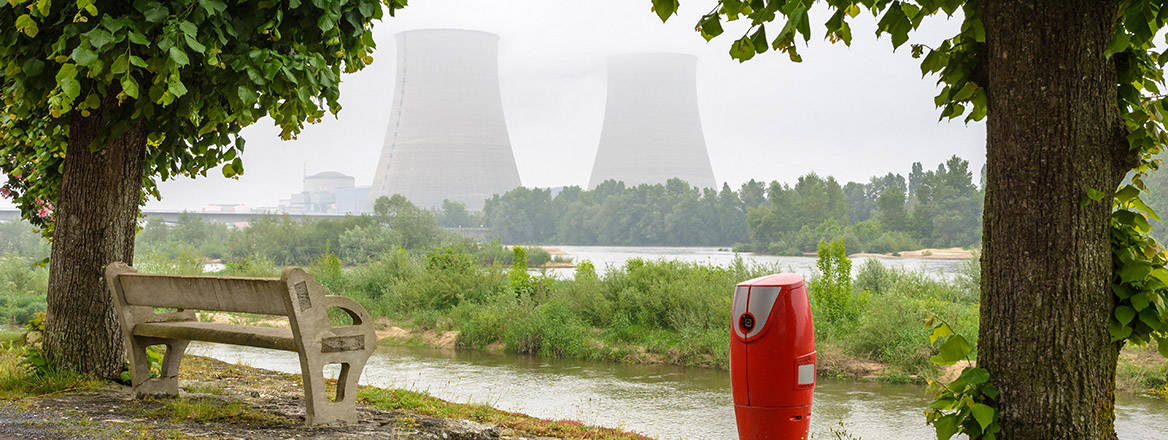
The adoption of nuclear power accelerated in reaction to oil crises in the past, and the proposition only makes greater sense today.
Modern nuclear energy policy cannot be understood without revisiting the oil crises of the 1970s. The oil embargo of 1973 and the subsequent supply shock in 1979 exposed a profound vulnerability at the heart of industrial economies: their overwhelming dependence on imported fossil fuels from geopolitically unstable regions. What followed was not simply a temporary spike in fuel prices but a fundamental shift in how governments thought about energy security.
Shortages triggered fuel rationing, long queues at petrol stations and widespread economic disruption across the Western world. The longer-term consequences were even more severe. The crisis produced stagflation – an unusual combination of high inflation and economic stagnation – while exposing the fragility of global energy supply chains built around cheap and abundant oil. Policymakers began to recognise that energy was not merely a commodity but a strategic vulnerability.
Half a century later, recent geopolitical tensions – from the Russia-Ukraine war to instability in the Middle East – have again highlighted the same structural weaknesses in global energy systems. Western economies remain heavily exposed to disruptions in hydrocarbons such as oil and natural gas, fuels that must move continuously through pipelines, shipping routes and other critical infrastructure.
These developments should serve as a wake-up call. Energy systems built around fuels that require constant transportation, limited storage capacity and complex logistics are inherently vulnerable to geopolitical shocks.
For decades, global energy markets have depended on continuous flows of fuel moving through a small number of strategic chokepoints. The Strait of Hormuz remains one of the most critical energy transit corridors in the world. A large share of globally traded oil passes through this narrow maritime route every day. Any disruption – whether caused by military conflict, sanctions, piracy or infrastructure failure – can rapidly trigger price spikes and supply shortages.
For policymakers seeking to reduce exposure to oil shocks and supply disruptions, nuclear power offered something fossil fuels could not
From a risk-analysis perspective, the oil crises of the 1970s revealed three interconnected threats
First was supply risk: dependence on a small group of exporting countries.
Second was price volatility: oil markets proved capable of destabilising entire economies in a matter of months.
Third was geopolitical leverage: energy could be weaponised as a tool of foreign policy.
Governments began searching for energy sources less vulnerable to these risks. Nuclear power emerged as one of the most compelling options. Against this backdrop, nuclear energy began to look increasingly attractive. Its fuel is extraordinarily energy dense, meaning that reactors require only small volumes of uranium and typically refuel every 18 to 24 months. Utilities can store years of fuel supply on site.
For policymakers seeking to reduce exposure to oil shocks and supply disruptions, nuclear power offered something fossil fuels could not: electricity generation that did not depend on continuous fuel deliveries.
The oil crises of the 1970s triggered a major expansion of nuclear programmes around the world as countries sought to diversify energy sources and reduce exposure to fossil-fuel markets.
No country responded more decisively than France.
Before the 1973 oil crisis, France relied heavily on imported oil for electricity generation. Roughly three-quarters of its energy supply came from abroad. When the embargo hit, French policymakers concluded that such dependence represented a strategic vulnerability comparable to reliance on foreign military protection.
The response was swift. In 1974 Prime Minister Pierre Messmer announced a sweeping energy policy that would fundamentally reshape the country’s electricity system. Known as the Messmer Plan, it called for a rapid and large-scale transition to nuclear power under the slogan ‘all electric, all nuclear.’
The plan had several defining characteristics.
First, decision-making was highly centralised. The French government authorised a massive nuclear build-out with minimal political delay, recognising that energy security was a strategic priority.

Second, the programme relied on standardised reactor technology. France adopted the pressurised water reactor design and replicated it across multiple sites, dramatically reducing construction times and costs.
Third, the state utility EDF coordinated the entire programme, enabling a level of industrial mobilisation rarely seen in civilian infrastructure projects.
The scale of construction was extraordinary. France built dozens of reactors within little more than a decade. At the peak of construction, as many as eight reactors were being built simultaneously.
The long-term consequences are still visible today.
Nuclear power supplies roughly two-thirds to three-quarters of French electricity.
France has become Europe’s largest exporter of electricity.
Energy self-sufficiency increased dramatically, rising from roughly 22 percent in 1973 to more than 50 percent by the 1990s.
In effect, France replaced geopolitical exposure to imported oil with a domestic nuclear industrial system. Uranium fuel – globally available and required in relatively small quantities – was considered far easier to secure than constant shipments of fossil fuels.
Other countries followed similar strategic logic. The United States expanded its reactor fleet rapidly during the 1970s and 1980s. Japan, lacking domestic energy resources, embraced nuclear power as a cornerstone of energy security. South Korea built one of the world’s most sophisticated nuclear industries, while the United Kingdom maintained a substantial nuclear generation capacity.
More recently, China has embarked on the most ambitious nuclear construction programme in modern history. Dozens of reactors are under construction or planned as Beijing seeks to reduce reliance on coal imports and strengthen long-term energy security.
Across these cases, the underlying rationale has remained remarkably consistent. Nuclear power provides a reliable baseload electricity source with fuel requirements far less exposed to geopolitical disruption than fossil fuels.

Today, the strategic arguments for nuclear energy are again gaining prominence. The Russia-Ukraine war exposed Europe’s dependence on imported natural gas. Disruptions to Russian pipeline supplies triggered an energy crisis across the continent and forced governments to scramble for alternative sources of fuel.
At the same time, instability in the Middle East continues to threaten global oil markets. The same geopolitical vulnerabilities that became apparent in the 1970s remain embedded in today’s energy system.
For many analysts, the parallels are striking. Energy systems evolve slowly, but crises often redefine what governments consider strategically necessary. In those moments, nuclear power repeatedly returns to the policy agenda.
Yet nuclear energy is not without its own strategic vulnerabilities.
While nuclear reactors themselves are highly resilient once operating, the upstream nuclear fuel supply chain presents challenges that Western governments have only recently begun to confront.
Uranium production is geographically concentrated. A large share of global supply comes from a relatively small number of countries including Kazakhstan, Canada, Australia and Namibia. Concentrated supply chains inherently increase exposure to geopolitical risks and market disruptions.
The United States illustrates the issue clearly. Despite operating one of the world’s largest fleets of nuclear reactors, the country imports more than 90 percent of the uranium used in its power plants. Domestic uranium mining has declined sharply over the past several decades and currently plays only a minor role in meeting national demand.
This situation reflects a broader pattern across Western economies. For much of the past forty years, uranium markets were characterised by abundant supply and relatively low prices. As a result, many governments allowed domestic production capacity and elements of the nuclear fuel cycle to atrophy.
The assumption was that global markets would reliably provide fuel.
That assumption is now being reassessed.

Unlike fossil fuels, uranium has one important advantage: it can be stored easily and inexpensively for long periods. Because reactors require relatively small volumes of fuel, utilities and governments can maintain significant inventories at modest cost.
This characteristic creates an opportunity for policy intervention.
One potential response would be the creation of strategic uranium reserves, similar to the strategic petroleum reserves maintained by many countries. Such stockpiles could provide a buffer against supply disruptions or geopolitical shocks.
However, strengthening nuclear fuel security requires more than simply stockpiling uranium. It requires examining the entire nuclear fuel cycle – from uranium mining through conversion, enrichment and fuel fabrication.
In this regard, China has taken a notably strategic approach. Over the past two decades Chinese state-owned nuclear companies have invested heavily in uranium mining projects across Central Asia, Africa and other regions. Long-term supply contracts and overseas investments have helped secure fuel for the country’s rapidly expanding reactor fleet.
China has also developed domestic capacity across the entire nuclear fuel cycle, including conversion, enrichment and fuel fabrication. In several areas it is now effectively self-sufficient.
Western countries historically relied more heavily on commercial market mechanisms rather than coordinated supply strategies. While this approach functioned during periods of abundant supply, it has left parts of the Western nuclear fuel cycle increasingly dependent on external suppliers.
At the same time, structural changes are emerging within the uranium market itself. After decades of oversupply, analysts increasingly expect uranium demand to outpace production as global nuclear construction accelerates.
If these trends continue, the next major uranium market disruption may be driven not primarily by geopolitics but by simple supply constraints.
Developing domestic mining capacity in Western countries could help mitigate some of these risks, but it is unlikely to be sufficient on its own. The more realistic strategy is diversification – securing reliable uranium supplies from a broad range of producer nations.
Nuclear power remains one of the most robust forms of large-scale electricity generation available to modern economies
Countries such as Kazakhstan, Uzbekistan, Mongolia and Niger play a crucial role in global uranium production. Strengthening partnerships with reliable producer nations could reduce reliance on a small number of supply sources and improve resilience across the nuclear fuel market.
Equally important is rebuilding Western capabilities in the downstream stages of the nuclear fuel cycle. Conversion and enrichment facilities transform mined uranium into usable reactor fuel, yet much of this infrastructure has declined across Western economies over the past several decades.
Reinvesting in these capabilities will be essential if nuclear energy is to play a larger role in future energy systems.
The central lesson of the oil crises remains clear. Energy security is ultimately a question of resilience – how well an energy system can withstand geopolitical shocks, supply disruptions and market volatility.
By that measure, nuclear power remains one of the most robust forms of large-scale electricity generation available to modern economies. Its fuel is compact, energy dense and easily stockpiled. Its plants operate for decades and produce reliable baseload power largely independent of global commodity flows.
Yet the resilience of nuclear energy ultimately depends on the security of its fuel supply.
As governments once again reconsider the role of nuclear power in a turbulent geopolitical environment, uranium – and the infrastructure that turns it into reactor fuel – may prove to be the most strategically important link in the chain.
© RUSI, 2026.
The views expressed in this Commentary are the author's, and do not represent those of RUSI or any other institution.
For terms of use, see Website Terms and Conditions of Use.
Have an idea for a Commentary you'd like to write for us? Send a short pitch to commentaries@rusi.org and we'll get back to you if it fits into our research interests. View full guidelines for contributors.
WRITTEN BY
Nick Clarke
RUSI Senior Associate Fellow, Organised Crime and Policing


- Jim McLeanMedia Relations Manager+44 (0)7917 373 069JimMc@rusi.org