

Balochistan's Insurgency Is Turning Security into a Development Cost

Pakistan counts militants killed to the digit. It does not routinely measure whether goods can still move through Balochistan.
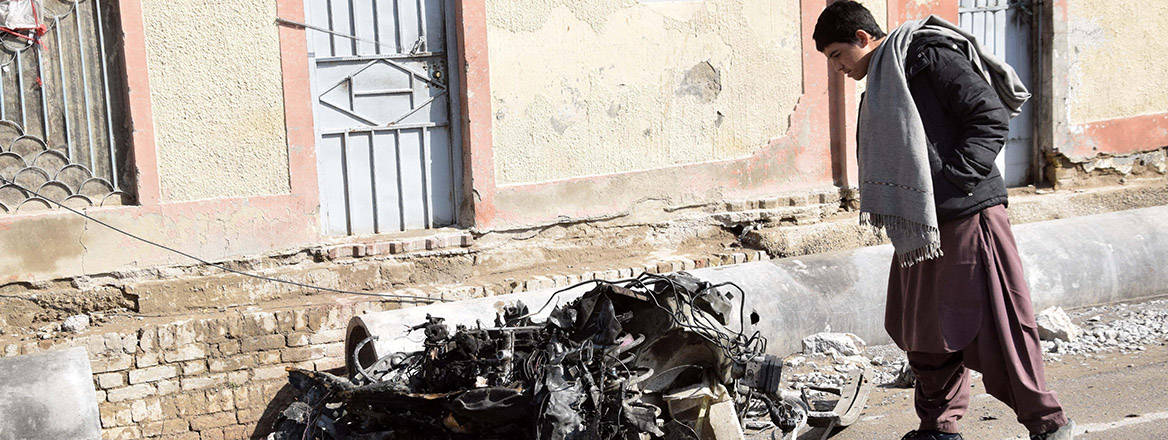
Around mid-July, armed men blocked the N-40, the highway that runs west from Quetta to the Iranian frontier, at Nokcha in Chagai district. They stopped five oil tankers heading for the border town of Taftan and burned them. Police confirmed the incident and said the attackers left on motorcycles before security forces arrived. The oil tankers were empty and had come back to fetch Iranian oil. There were no killings.
On its own, the attack reads as one more entry in a long ledger. At a traders' meeting in Quetta in June, the secretary general of the Pakistan Mines Owners Association observed that the burning of cargo trucks was not a new problem and had continued since 1995.
He is right. The tactic is not new. Balochistan's separatists have been attacking transport and infrastructure for decades. Railways, pipelines, power transmission towers and road convoys have all been targeted before. What has changed is how these attacks are being understood. What is new is not the attack. It is the reaction.
An Old Tactic, A New Result
They do not need to shut a road permanently. They only need to make it risky enough that the state has to spend money keeping it open. Start with the people who move the cargo. The Balochistan Goods Truck Owners Association told a press conference in Quetta that 28 cargo trucks had been burned in a two-week period. Transporters suspended mineral loading altogether, citing attacks on vehicles alongside extortion demands.
In June, traders and transport unions convened by the Quetta Chamber of Commerce and Industry gave the provincial government a 48-hour ultimatum, demanding security on transit routes, a compensation fund for destroyed vehicles, guarantees for drivers and repairs to damaged roads. They threatened to blockade the province's own highways if the demands went unmet. Truckers had already gone on strike in late May.
The insurgency is imposing a real cost on the state without holding any ground. Balochistan is Pakistan's poorest province, and it is being forced to divert development money just to keep goods moving, something working roads and normal policing would ordinarily handle
The disruption then reached beyond the province. In early June, the president of the Gwadar Chamber of Commerce and Industry, Jiand Hoot, said Chaman was closed, traders at Taftan were on strike over deteriorating security, and trade through Panjgur and Mand-Radig was virtually non-existent because of poor roads and recurring arson against vehicles. That left the overland energy supply chain heavily dependent on the Gabd-Rimdan crossing. Pakistan Customs disputed the chamber's account of conditions at Gabd-Rimdan, stating that clearances continued normally through the period.
The provincial response has been expensive. In July, Balochistan approved a dedicated highway protection force costing around 25 billion rupees, funded by reallocating money from the provincial development budget. Announcing the decision, Additional Chief Secretary for Home Hamza Shafqaat said the province was prioritising the safety of commuters and supply chains.
Because the force will take time to raise, the Home Department also approved an interim convoy system, drawing on the Frontier Corps and other security formations to escort vehicles from Taftan to Quetta and onward. It opened negotiations with State Life Insurance, the state-owned insurer, on a cargo scheme offering fast-tracked compensation to transporters whose vehicles had been burned. The convoy system was confirmed to the Quetta chamber in early July.
The insurgency is imposing a real cost on the state without holding any ground. Balochistan is Pakistan's poorest province, and it is being forced to divert development money just to keep goods moving, something working roads and normal policing would ordinarily handle. When goods can only move under military escort, the road is open but it is not normal anymore. And keeping it that way is now the province's bill.
Counting the Wrong Things
This is also where the usual counterinsurgency scorecard falls short. Pakistani security forces have inflicted heavy losses. The Pak Institute for Peace Studies, an Islamabad research body that tracks political violence, recorded 1,313 militants killed in 2025 against 639 the year before. Across the same year it also recorded 699 attacks nationally, up 34%, with attacks by Baloch armed groups reaching 254.

The figures therefore do not support a simple equation between militant attrition and declining insurgent effectiveness. A campaign whose object is to make moving goods expensive does not need to survive contact with security forces in order to work. It needs only to recur often enough that a transporter recalculates the route, and the evidence that transporters are recalculating sits in their own public statements.
There is a further reason this has been hard to answer, and it concerns intent rather than capability. The attacks are not distributed randomly across the transport sector. Oil tankers, gas tankers and vehicles carrying minerals out of the province recur as targets, and Baloch armed groups have publicly warned transport owners against carrying what those groups describe as extracted resources.
When transporters refuse to load minerals at all, a single attack does far more damage than the attack itself.
The comparison is less with a campaign to seize territory than with one aimed at making investment harder. That is what gives this campaign an audience outside Pakistan. Reko Diq is one of the world's largest undeveloped copper and gold deposits and it is being developed by Barrick Mining alongside Pakistani state partners. Saindak operates under Chinese management. Both sit in Chagai, the same district where July's tankers were burned, and both depend on the roads that run through it.
What Success Would Look Like
The bigger risk here may not be escalation. It is permanence. Escalation is visible and generates response. What settles quietly is harder to reverse. Convoys move on a schedule under escort, certain roads are used in daylight only, and mining and energy firms price in a security premium or decline to bid at all. Each adjustment is individually rational. The result is a province where goods still move, but on terms it did not choose.
Clearing an area of militants is not the same as getting goods moving again, but the two are being counted as if they were. The point of highway security is to make the escort unnecessary. If escorted movement becomes the norm on Balochistan's main routes, that is a warning sign, not a success. Security spending works when it restores ordinary commercial movement. It has not worked when it just makes the emergency permanent and keeps the road technically open.

Knowing whether that is happening requires figures the state does not currently produce. Militant fatalities are counted precisely, published monthly and cited as evidence of progress. Freight volumes on the Taftan route, insurance rates on Balochistan cargo, days of suspended mineral loading and the share of commercial traffic now moving under escort are not routinely published anywhere.
The convoy system can begin generating the first set of records, and the insurance scheme could provide data on losses and premiums once it is operating. The Quetta Chamber of Commerce and the transport associations already hold much of the rest. Publishing those figures quarterly would establish whether the blockade is being defeated or absorbed, and would give a 25-billion-rupee force something to be assessed against beyond the number of attacks it responds to.
Until those figures exist, the burning trucks will keep being counted one at a time, and the thing they measure will not be counted at all.
© Filza Asim, 2026, published by RUSI with permission of the author.
The views expressed in this Commentary are the author's, and do not represent those of RUSI or any other institution.
For terms of use, see Website Terms and Conditions of Use.
Have an idea for a Commentary you'd like to write for us? Send a short pitch to commentaries@rusi.org and we'll get back to you if it fits into our research interests. View full guidelines for contributors.
WRITTEN BY
Filza Asim
Guest Contributor


- Jim McLeanMedia Relations Manager+44 (0)7917 373 069JimMc@rusi.org