

Back to Square One: The EU's Endless Energy Dependency Trap

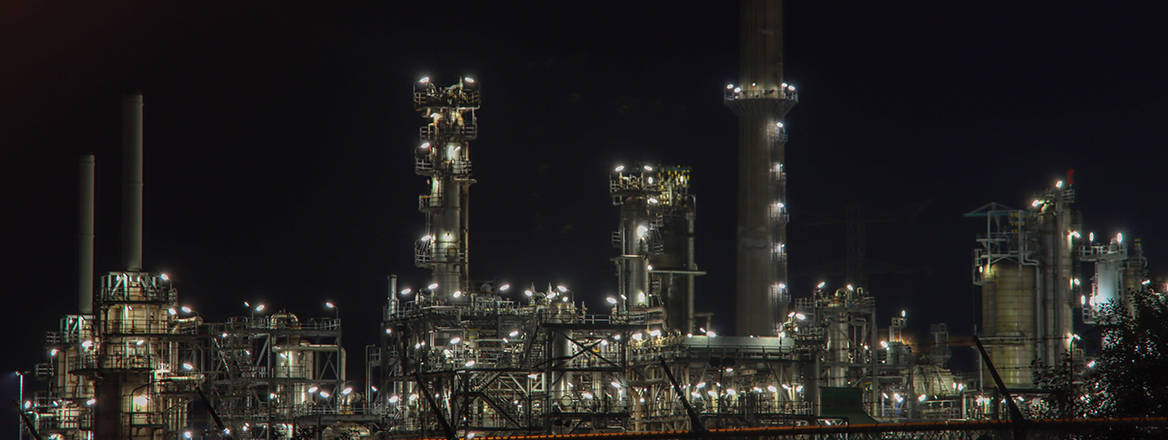
The disruption of the Strait of Hormuz has shaken oil and gas prices, and for Europe, can only stir a greater drive for energy independence.
In the wake of Russia halting gas exports to pressure Europe over its stance on Ukraine, the EU started REPowerEU plan to secure supplies through geographical diversification and clean energy installation. And as the imperative diminished, the energy security debate has largely focused on protecting critical infrastructure from hybrid threats and cyberattacks – casting supply security into the shadows. However, the recent military escalation involving the United States, Israel and Iran has brought attention back to a more traditional vulnerability: reliance on energy imports moving through geopolitical chokepoints.
Iran has de facto closed the Strait of Hormuz, through which flows around 20% of global oil and liquefied natural gas (LNG) shipments, making it one of the world’s most important energy routes. As a result, maritime insurers have begun refusing coverage for vessels in the region, forcing market participants to price geopolitical risk more directly into energy markets.
Strategic Reserves are Serving Their Purpose
Despite the focus on oil markets, some cushioning remains possible for a short period. Global supply has been relatively abundant in recent years and some producers maintain spare capacity. Alternative oil infrastructure can also allow Gulf producers to reroute about one-quarter of Hormuz oil flows, offering some flexibility.
Major economies maintain large strategic oil reserves, making physical oil shortage unlikely in the short term. EU countries are required to hold emergency stocks equal to at least 90 days of net imports or 61 days of consumption, while Japan and South Korea maintain reserves covering more than 200 days of consumption. China’s stockpiles are estimated to cover roughly 90–120 days.
The natural gas market is far more sensitive to disruptions in the Strait of Hormuz. Qatar, the world’s third-largest LNG exporter, ships virtually all its LNG through this chokepoint and, unlike oil, there are no alternative export routes. As a result, any disruption to shipping in the region immediately affects global LNG supply.
The situation is further complicated by the fact that the EU must now begin refilling its gas storage facilities after the winter season . . . If prices remain elevated, replenishing these stocks will become significantly more expensive for both governments and consumers
In volume terms, such disruption mainly impacts Asian economies, which depend heavily on Qatari LNG. Countries such as Japan, South Korea and China would likely compete aggressively for alternative cargoes if Gulf flows were disrupted for an extended period. This would quickly tighten the global LNG market and push higher prices for all importers.
The EU’s exposure would therefore be felt primarily through prices rather than volumes. At first glance, the European Union may appear less vulnerable than during the 2022 energy crisis. In 2025, the EU consumed roughly 320 billion cubic metres of natural gas, while imports from Qatar are about 4% of the EU’s total consumption. Yet LNG is a global market and disruptions elsewhere quickly translate into price pressures in Europe.
Indeed, European gas prices jumped by more than a third within days of the current escalation, reaching their highest levels in two years. This demonstrates how even limited geopolitical risk can rapidly affect European energy markets.
The situation is further complicated by the fact that the EU must now begin refilling its gas storage facilities after the winter season. At only 30% capacity, storage levels are unusually low and under European Commission rules, they must reach at least 90% capacity by December. If prices remain elevated, replenishing these stocks will become significantly more expensive for both governments and consumers.
Rising gas prices quickly ripple through electricity markets. In Europe's merit-order system, the marginal generator, often a gas-fired power plant, sets the price for all electricity, driving up power costs. During the military operation against Iran, EU gas generation costs jumped 51% in just days.

Help your search results show more from RUSI. Adding RUSI as a preferred source on Google means our analysis appears more prominently.

Stay up to date with the latest publications and events as part of the UK National Security and the Net Zero Transition programme of work

Europe is again confronted by its dependence on imported energy. Although Europe shifted reliance from Russian pipeline gas to the US – now the continent's largest LNG supplier – after Russia's invasion of Ukraine, vulnerabilities remain structural. A 2022 fire at the Freeport LNG terminal in the US caused European natural gas prices to increase by nearly 40%, while Norway's Hammerfest LNG shutdown in 2025, increased spot LNG prices by 12% within days.
Europe’s Requirement for Energy Independence
Europe’s energy independence requires more domestic production.
One way to achieve this is by speeding up the electrification of the economy. Electrification helps shift some energy consumption away from imported fossil fuels toward electricity generated domestically. The more energy is used as electricity, the greater the proportion Europe can produce from domestic clean energy sources.
Electrification can also make energy systems more resilient. Oil and gas production is concentrated in a handful of regions and relies on long supply chains and vulnerable transport routes. Electricity, by contrast, can be generated from multiple sources across many locations, allowing energy production to be more geographically distributed and reducing dependence on external suppliers.
Electrification alone will not solve all energy security problems. Expanding clean energy and electricity infrastructure increases dependence on key technologies and materials, many of which are dominated by China. At the same time, a digital energy system is more vulnerable to cyberattacks.
The key difference is that the solutions to these challenges largely lie within the EU’s own political control. While difficult, EU supply chains can be diversified through precision decoupling policies, precis domestic industry strengthened and infrastructure security improved through political decisions and investment.
True energy independence begins not just when energy is produced at home, and meeting this challenge will require continued political will, sustained investment and collective effort across the continent. The lessons of recent crises are clear: Europe must lead on its own terms to achieve lasting energy security.
© RUSI, 2026.
The views expressed in this Commentary are the authors', and do not represent those of RUSI or any other institution.
For terms of use, see Website Terms and Conditions of Use.
Have an idea for a Commentary you'd like to write for us? Send a short pitch to commentaries@rusi.org and we'll get back to you if it fits into our research interests. View full guidelines for contributors.
WRITTEN BY
Petras Katinas
Research Fellow in Climate, Energy and Defence
International Security


- Jim McLeanMedia Relations Manager+44 (0)7917 373 069JimMc@rusi.org