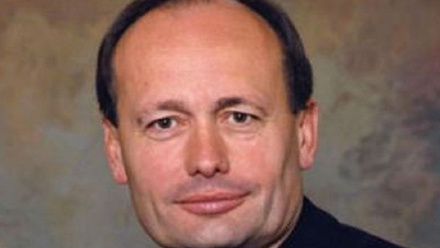
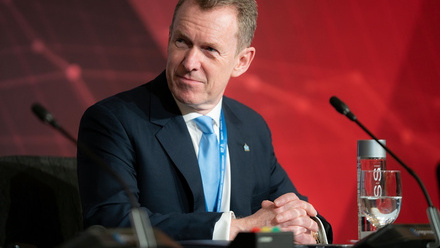
Confirmed speakers include:
Last year’s forum convened during the American presidential campaign period. Entitled “America and the World Beyond 2008”, the two-day conference explored directions for US foreign policy in the post-Bush era. Key American foreign policy advisors spoke at the event alongside influential academics in the field. Discussions focused on climate change, global finance, the Middle East, weapons proliferation, the Atlantic Alliance and global health concerns.
Transatlantic ‘crises’ are nothing new to the Alliance, but with the Bush era receding into history, it is time to re-examine the lingering differences between the two sides of the Atlantic. President Obama’s first official visit to Europe was a resounding success. He remains wildly popular across Europe, and there is much hope in EU capitals that the US and Europe will renew their commitments to promoting multilateralism, diplomacy and international law in their foreign policies. Both sides recognise that in an interconnected world, complex challenges can only be addressed through bilateral and regional co-operation or treaty-based international organisations. Both sides also maintain that their foreign and security policies should never compromise the liberal values that underpin their societies and their partnership. Both sides have renewed commitments to what President Obama poignantly called the ‘Transatlantic Alliance’.
Nevertheless, as the post-inauguration honeymoon period subsides, it is giving way to a period of hard work and compromise. The Presidential transition came at one of the most difficult moments in world politics since the beginning of the Cold War. The economic crisis, global slowdown, wars in Afghanistan, the Middle East, climate change and energy security, non-proliferation and the politics of withdrawal from Iraq are challenging the new leadership. Moreover, the process of transatlantic re-alignment is proving more difficult than expected. The US and Europe are deeply divided over their assessments of the global economy; and the stability of the Euro, regulatory co-operation and risk management strategies are emerging as key issues in transatlantic relations. The allies never managed to close ranks over the Middle East peace process and they diverge in their approaches to Afghanistan, civil-military co-operation, operations in ungoverned areas, Iran and Pakistan. Europe will struggle to deliver on America’s expectations for greater burden-sharing in NATO, and re-calibrating enlargement policies and NATO-Russia relations will likely dog the allies for quite some time.
If the US and Europe are to exercise joint global leadership and a clear vision for world order, they need a better understanding of one another’s strategic outlooks, interests, capabilities and limitations. The annual Global Leadership Forum marks the pinnacle of RUSI’s transatlantic research calendar. In association with Princeton University, Newsweek International and Berwin Leighton Paisner, the two-day international conference will bring together high level speakers from Europe and America. It will draw a wide audience of government officials and academics, and topics to be addressed include:
For details regarding the programme or sponsorship, please contact Dr Lisa Aronsson at lisaa@rusi.org or by telephone, +44 (0)20 7747 4963.
Event manager: Sabrina Downey