Speech delivered at RUSI, 20 October 2008
Good morning ladies and gentlemen.
Let me first congratulate RUSI on being named Prospect magazine’s think tank of the year for 2008. Over the past year you have done tremendous work in the field of security and defence. And I think we can all agree that seldom in our history has research and innovative thinking in this field of study been so important. I both applaud and thank you for the work you do.
For example, in concert with the Center for Strategic and International Studies in Washington RUSI recently published a compelling article about NATO’s future in view of its current operation in Afghanistan. The authors argue that 'the troubles the Alliance has encountered in Afghanistan are not specific to the ISAF mission. They reflect very real changes in the global security environment – issues that to date NATO has failed to address'. In short, they see the operation in 'Afghanistan as a symptom, not the cause', and ask some hard-hitting questions that I believe our Alliance must answer. Questions such as: what are the long-term consequences if nations remain uncomfortable with far away missions like Afghanistan? Will NATO permanently opt to scale back missions outside the Euro-Atlantic area? What are the consequences of undertaking more missions like Afghanistan in light of varying beliefs within the alliance about the use of military force?
These are important questions – questions that rightly belong at NATO’s political level. However, the answers to these questions are undoubtedly shaped by what we do at the military strategic, operational, and tactical levels.
NATO’s role and credibility as a security provider in the post-cold war era will be judged by how we respond to emerging crises, and if committed, how well we perform in our operations. And as NATO’s operational commander, I can say that we are indeed performing admirably in our operations, but that we face numerous challenges: external challenges as a function of our opposition and the situations in which we are engaged; and internal challenges as a result of our policies and processes.
Let me first discuss these external challenges. The International Security Assistance Force in Afghanistan remains NATO’s operational priority. We all know the situation and the nature of our adversaries in Afghanistan are complex and challenging.
As you are no doubt aware, much has been made in recent weeks about the comments by Brigadier Mark Carleton-Smith – headlines sensationally claiming that we can’t defeat the Taliban, that a military victory over the Taliban is neither feasible nor supportable. Unfortunately, the headlines, while attention-getting, don’t accurately reflect the Brigadier’s position represented in the full article.
The fact is his comments are generally in line with what our military and political leaders have been saying all along: the conflict in Afghanistan cannot be won by military means alone – we are just one member of a greater team. The military must provide a safe and secure environment to enable the conditions for the government of Afghanistan – and the international community – to deliver good governance, reconstruction, and enduring development.
For this co-operative effort to succeed, we in the international community must come together as part of a truly comprehensive approach. The current effort remains disjointed in time and space
Perhaps the root of the problem is that we don’t all see the concept in the same light. For some a comprehensive approach entails the many actors in the international community playing their roles and doing their parts, individually, toward the collective vision for success.
For others, the concept is similar to a football team. Yes, now that David Beckham is bending it on our side of the Atlantic, we Yanks are now football experts as well. A football team is complete with strikers, midfielders, sweepers, and others, all with defined roles. But due to the fluidity of the game these roles are not distinct, rather the borders between those roles are often blurred. We all have a job to do, but those jobs certainly overlap and we must work together to accomplish our collective vision for success. I would argue that only through this latter vision is success in Afghanistan possible.
I offer the counter-narcotics effort as just one example. The Government of Afghanistan has the responsibility to tackle the narcotics problem – but it cannot do it alone. Numerous hurdles stand in the way. The nascent Afghan counter-narcotics force is just that – nascent. It is currently unable to conduct that essential mission autonomously, but other parties of the international community can and must blur the borders and play a greater role. NATO has the ability – with current means and capabilities in theatre – to make a tremendous impact. The Government of Afghanistan has asked NATO to increase its effort in this area, and NATO’s political leaders have granted approval for ISAF to do so.
The money from the narcotics trade is feeding the insurgency. It buys weapons and pays fighters – the weapons and fighters that kill soldiers and Afghan citizens alike. It is a cancer – contributing to corruption, impeding legitimate commerce, and undermining governance. The potential for the international community to turn the tide in this area is vast. Two weeks ago – NATO’s political leaders agreed to allow its forces to carry out targeted interdiction operations – operations against facilities and facilitators. In so doing we can begin to restrict the flow of money that funds the insurgency. To be most effective – our effort here needs to reach all corners of Afghanistan. I have encouraged all ISAF contributing nations to play part in this essential task.
In the end – I believe the overarching strategy of the international community is correct – but we must find a way to enhance our comprehensive approach toward success. We need a cohesive and coherent effort with cooperation and coordination – building on common strengths and off-setting persistent shortfalls.
The border region between Afghanistan and Pakistan remains problematic. Both nations are confronted by a common enemy that does not respect the border. Its porous nature necessitates constructive engagement between Afghanistan, Pakistan and ISAF.
We continue to encourage the Pakistani authorities to take the necessary steps to prevent its territory from being used as a sanctuary, training ground, or command and control centre for insurgent operations in Afghanistan. We continue to work with Pakistan – militarily in the framework of the tripartite commission – a cooperative effort comprising military representatives from ISAF, Afghanistan, and Pakistan. A similar cooperative effort is needed in the political field also.
Security in Pakistan and Afghanistan is undoubtedly linked. We must continue to engage with Pakistan – at all levels – to find solutions – cooperative solutions – to this far-reaching problem.
But perhaps a greater security challenge surfaces in the relationship between security and governance. Without strong governance – there can be no lasting security. Law enforcement and justice are integral parts of good governance. ISAF can conduct an overwhelming military operation to expel extremists in a given area and establish security – but if governance – in the form of an effective police and justice system – does not immediately follow – the military gains will be for naught.
The problem of poor policing is well-known – and the international community is actively and aggressively taking on this challenge – but a well-functioning justice system remains largely elusive. Unfortunately – there is a perception among much of the Afghan population that the Taliban system of justice is much more effective than that of the government of Afghanistan. Taliban justice is seen as swift, sensitive to cultural issues, and largely devoid of corruption. Whereas the government’s system is seen as slow, excessively bureaucratic, and fraught with corruption. The government of Afghanistan and the international community must tackle this issue as an essential element of long-lasting success.
Now – as I mentioned at the outset – not all of our challenges are of the external variety. We continue to face internal challenges – challenges over which we in NATO have much control. Many of the internal challenges NATO faces in conducting its operations revolve around the issue of our level of ambition and how it relates to political will.
A brief look at the will of our alliance in the mission in Afghanistan demonstrates some real shortcomings. In view of the more than seventy national operational restrictions – or ‘caveats’ – and our continual inability to fill our agreed-upon statement of requirements in theatre – we are demonstrating a political will that is – somewhat – wavering.
And it is this wavering political will that impedes operational progress and brings into question the relevancy of the alliance here in the twenty-first century.
Clearly – the alliance cannot nor should not do everything everywhere – but we need to define what role we wish to play in today’s security environment.
For more than sixty years NATO has been a pillar of strength and guarantor of peace in our world. But today’s security environment is not the same as it was ten years, five years, one year, or even one month ago. NATO must continually assess the role it wants to have in the current security environment and assess its capabilities and its will to fulfil that role.
NATO is in a challenging period of transformation – adapting to the realities of a changed Europe and a changed world. Simultaneously – we are conducting demanding and diverse operations on three continents. We are taking important steps to complete the transformation from a static, reactive alliance focused largely on territorial defence – to an expeditionary, flexible, visionary alliance that works with members and partners – to anticipate, deter and defeat the range of twenty-first century threats confronting our collective security.
I believe our alliance should start with a comprehensive global strategic threat assessment – shortly followed by a twenty-first century strategic concept. Our alliance today operates under a strategic concept written in 1999. The security environment of today is drastically different than that of 1999.
In 1999 – Great Britain introduced harry potter to the world and gave the United States 'Who Wants to be a Millionaire'. In return – the United States gave Great Britain Wal-Mart. Boris Yeltsin was at the helm in Russia – Scotland won the rugby union five-nations championship – and the euro was introduced as an electronic currency. Google – with just eight employees – was merely another search engine – and the world braced for the Y2k bug.
We’ve seen the growth of transnational terrorism with catastrophic effect – the continuing emergence of china on the international scene – and a rising Russia seeking to revive its influence with its European and Asian neighbours. We see Iran striving to develop ballistic missile and nuclear weapons programs – and within the Euro-Atlantic area – we see newly established nations in the Balkans taking further steps toward NATO membership. Clearly – we must define the role of our alliance in this new and evolving environment.
No one knows for certain what issues lie beyond the horizon – numerous trouble spots exist around the globe – add in the continuing threat of transnational terrorism and the issues of energy security, climate change, cyber attacks, the rise in influence of non-state actors and the proliferation of weapons of mass destruction – the potential for crises is vast! The need for rapid, effective crisis response cannot be overstated.
NATO can play a profound role in the prevention of – and the response and resolution to – many of those crises. Our heads of state and government have continually mandated that we be ready to do so – in Brussels, in Riga, and again in Bucharest.
Whatever we decide, NATO’s role is in our world – we must all be certain that our reach does not extend beyond our grasp – that our level of ambition is in step with our political will and our military capability.
We must also – within all corners of the alliance – continue to evolve our policies and processes – policies and processes that were created during the Cold War and designed for the Cold War.
Our alliance continues to operate with a ‘costs lie where they fall’ policy. The costs of deployment fall to the individual nations committing and deploying troops to theatre. That means that the nations choosing to bear the burden militarily are the same nations bearing the burden monetarily. An expeditionary alliance must find a better way. The alliance needs to further explore the use of common funding. With a system of common funding – deployment costs can be shared – thereby reducing the strain on national defence budgets.
Moreover – current and future operational challenges and emerging threats in the twenty-first century security environment do not allow for the traditional bureaucratic – time-intensive processes of the twentieth century NATO. More flexible and rapid decision-making processes are needed if we are to address the challenges we face today and tomorrow.
Our alliance has long operated under the system of consensus – and at the political level – this system has proven powerful in garnering international support and legitimacy. But do we really need to achieve consensus at every level of committee within the NATO structure? In my judgement this policy stands squarely in the path of agile decision-making.
Since the fall of the Berlin Wall – NATO has sought to transform the alliance as a function of the existing security environment. And while much work remains to be done – the outcomes of the defence ministerial meeting two weeks ago are testament to our willingness to take on these challenges and to work to make our alliance more relevant. Let me take a moment to highlight those successes.
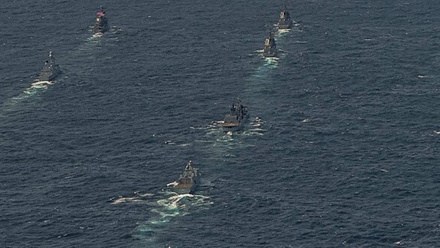
First – the alliance committed to take an active role in the prevention of piracy off the coast of Somalia. We should not underestimate the importance of this decision – nor the precedent it sets for our alliance. NATO’s political leaders approved a mission for which there was no detailed CONPLAN or OPLAN. We are demonstrating that we can react – quickly – in times of crisis. It is this capability that demonstrates to the world our relevancy here in the twenty-first century.
Furthermore – we resolved to increase our expeditionary capabilities by raising the target of the deployability of national land forces. Regional crises have global effect – to respond to these crises around the world – we must be rapidly deployable. And finally – we resolved to play a heightened role in the counter-narcotics effort in Afghanistan – an area I believe will have tremendous impact as we in the international community strive toward success in Afghanistan.
Operationally in NATO – challenges abound – external ones and internal ones. But in the face of these challenges – NATO is succeeding, we are making a difference – in Afghanistan and elsewhere. And as we continue to address these challenges, our ability to progress operationally will increase, as will our ability to demonstrate our relevancy here in the twenty-first century.
Allow me to hearken back to the RUSI article I mentioned at the outset. The authors go on to argue that 'at its heart – the alliance is still very much a cold war organisation.' Indeed – much work remains to be done in addressing today’s policy and procedural anachronisms – but I earnestly believe NATO’s role in the twenty-first century security environment is every bit as important as its role in the twentiethcentury. We must look intently at what we want our alliance to be and what we want it to do. Then – we need to take the necessary steps to realise that vision. Our citizens deserve nothing less – and the spectrum of twenty-first century threats confronting our collective security demands nothing less.
I hope NATO nations will heed the call to action. The challenges in the twenty-first century are many and they are complex. We in NATO have the ambition – we have the military capability – but do we have the will to address these challenges?"