POLISH LESSONS LEARNED FROM OPERATIONS - DEFENCE TRANSFORMATION
The contemporary security environment is shaped by a wide spectrum of challenges and threats. Most of the existing armed conflicts take place on the Eurasian and Central African continent. Terrorist attacks in Iraq and Afghanistan have become a regular occurrence and have a tendency to spread. The manslaughters in Africa, such as those in Sudan, Ethiopia, Eritrea and Somalia, are particularly violent. Continuous threats exist in the Balkans, some countries of the Former Soviet Union as well as on the Indochina Peninsula. The turn of the centuries has shown that the likelihood of large scale armed conflicts has decreased. However, at the same time the probability of low intensity conflicts and asymmetrical warfare has grown. We are also facing an increasing role of famine as well as pandemic diseases. The rise of uncontrolled migration and an increase of organised crime also become a global issue. Scarceness of energy resources as well as a new phenomenon, potential blackmailing with those resources, have also recently become visible.
Having these in mind, we have to take the contemporary challenges into account while pursuing to gain new capabilities of our armed forces. These challenges encompass a move from static to mobile expeditionary forces, joint, coherent, interoperable, ready for a range of conflicts wherever and whenever they are required, prepared for transition from war fighting to peacekeeping and vice-versa, and taking into consideration the newly developed concepts of Comprehensive Approach and Effects Based Approach to Operations (EBAO). Furthermore, the future force must be capable of operating within a networked environment.
Poland traditionally was active in peace support and stabilisation missions. This was demonstrated in various operations led under the UN, NATO, OSCE or the EU, or under coalitions of the willing. Until the year 1999—the year of Poland’s NATO accession—almost 50 thousand Polish soldiers served in more than 50 peace-keeping and humanitarian missions under the auspices of the United Nations, by now we have roughly 15,000 additional troops who went through various operations. Over the recent decade, when Poland joined NATO and then the EU, the international military participation of Poland extended significantly. Throughout these years the Polish military deployments underwent an important evolution. Initially, our tasks logistical in nature, were replaced by peace enforcement operations conducted first by national and later by multinational units, which were also commanded by Polish officers.
Currently the Polish Armed Forces are deployed to eight different operations:
•
Two operations under the United Nations: UNDOF – at the Golan Heights, and UNIFIL in Lebanon;•
Three operations led by NATO: ISAF in Afghanistan, KFOR in Kosovo, and NTM-I (a NATO training mission) in Iraq;•
Two operations under the auspices of the EU – called ALTHEA in Bosnia and Herzegovina, and the other just starting in Chad;•
And one operation as part of the Global War Against Terrorism in Iraq as part of the Coalition of the Willing.Overall about 3,500 Polish soldiers serve every day abroad. Furthermore, a considerable number of military observers take part in various peace support missions such as those in Ethiopia, Eritrea, Congo, Western Sahara, or on the Ivory Coast. In 2003 I had the privilege to personally command the UNIKOM observer mission which was at the borderline of Kuwait and Iraq and between 2003 and 2004 UN forces (UNDOF) at the Golan Heights.
The most serious transformation for the Polish military was enforced by our participation in the operation Iraqi Freedom. In 2003 we actively joined the global war on terror and since that time more than 10,000 soldiers have gone through a severe test within real threat environments. We reckon that our stay in Iraq has significantly contributed to the enhancement of the stability of the Iraqi population that lives in the area of our operating forces. Therefore, our national authorities have recently made a decision to terminate the mission by the end of October 2008.
The most important operation that we contribute to at present is the ISAF mission in Afghanistan. Right now the Polish military contingent in Afghanistan is the eighth largest among approx. 40 troop contributing nations. We view the ISAF operation as a test of the Alliance’s reliability, and at the same time a test of the Polish military’s capabilities to conduct operations far from our own territory under extreme conditions. By having the Polish troops which operate without any caveats, NATO commanders have the necessary operational and tactical flexibility which significantly enhances the mission effectiveness. The first rotation showed that we are prepared for such type of operations, and proved that the transformation process initiated prior to Poland’s NATO membership achieved the expected results. During the second half of 2008 we plan on enlarging the Polish military contingent to the ISAF operation from the current 1,200 troops to roughly 1,600. We will additionally form two OMLTs (Observer and Military Liaison Teams), take over the responsibilities of the SHARANA Provincial Reconstruction Team, and we also plan to deploy eight transport and combat helicopters along with their technical support element. Our experiences have shown, however, that for better command and control purposes, the forces should be concentrated in possibly one part of Afghanistan and take responsibility for the safety of one of the provinces in the Eastern region.
In 2008 we will also participate in two additional NATO missions – the Air Policing mission and operation Active Endeavour. Currently, the Air Force is preparing its second contingent as part of the Air Policing mission in the Baltic countries (four MiG-29 aircraft and approx. 100 personnel). The Polish military contingent will conduct its operation in the period from 15 March to 30 June 2008. In the future Poland envisions to continue such periodical engagement every two years until permanent solutions on protecting the air space of the Baltic states are in place. Enriched by these experiences we also consider participating in the Air Policing mission over Iceland in 2010.
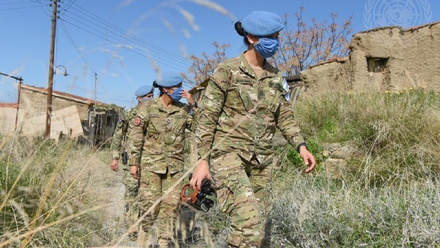
Elaborating a little more on the issue of UN peacekeeping operations let me point the year 1973 which brought a significant transition to Poland in the area of peace support operations. We deployed then for the first time an autonomous military contingent. Our soldiers went to the Middle East, where they served on the Sinai peninsula and later on the Golan Heights, and supervised the peace accord between Israel, Egypt and Syria. Until today the Polish troops under the blue flag at the Golan Heights in the disengagement zone between Israeli and Syrian troops. Our engagement in UN operations roughly constitutes a fifth of our overall international military deployments, what we consider as quite a significant contribution to the United Nations Organisation.
In parallel to the NATO engagement Poland also participates in missions conducted by the EU. Participation in the ALTHEA operation as well as in the Democratic Republic of Congo testifies of the high priority that we attach to the EU endeavours within ESDP. We have reached readiness for the EU mission in the Republic of Chad. The deployment of the Polish military to this operation will be primarily a logistical challenge consisting of the need to create appropriate conditions enabling our soldiers to effectively operate in the region deprived of any infrastructure. Poland declared to send a 400-men strong contingent consisting of battalion HQ, two manoeuvre companies, an engineering company, two helicopters and a national support element (NSE). A consequence of our support to ESDP is the Polish engagement in some EU Battlegroups in all of them we will be the frame nation, i.e. the German-Latvian–Lithuanian-Polish-Slovak EU BG is to reach its readiness in the first half of 2010. The EU Battlegroup 2010 will be able to conduct the full spectrum of operations envisioned for and expected of EU Battlegroups, such as separation of parties, conflict prevention, evacuation operations or assistance to humanitarian operations. The second is the Weimar EU BG comprised of German, French and Polish troops – readiness to be attained in the first half of 2013. We also envision to form a Visegrad EU BG with participation of Czech, Slovak, Hungarian and Polish, but also Ukrainian components – readiness to be reached by 2015.
All of the mentioned engagements of the Polish Armed Forces in the operations worldwide bring us to a significant conclusion: there is no effective operation without transformation of the forces, and there is no effective transformation without drawing the lessons learned from the conducted operations.
Experiences from missions have already been used to restructure the central institutions of the Polish Armed Forces. At the strategic level we modified the structure of the General Staff. It became more interoperable with NATO structures by having added new directorates for training and gathering lessons learned (J7) as well as defence resources planning (J8) responsible for centrally merging all the materiel plans for the Polish military. The jointness is enhanced at all command levels of the Polish military. Let me start with the Joint Operational Command which was established not long ago. This institution is responsible for the full spectrum of operations – it executes de facto command and control over all our military contingents abroad. A Joint Support Inspectorate has also been formed, which ensures the logistical sustainment of all troops in the country and abroad. We expect that thanks to the inspectorate, the efficiency of supplying the troops will be enhanced. Realising the importance of logistics for operations, we have recently also formed two autonomous logistics brigades.
Medical services have been combined under the umbrella of one single institution – the Joint Medical Inspectorate in order to provide necessary healthcare to our personnel. Furthermore, we have introduced a separate fourth service of special forces that comprises elements from the other three armed services. We put emphasis on the meaning of special forces in crisis response operations. Currently, a part of our SOF conducts tasks in the southern region of Afghanistan. The forces operated also in Iraq. We are considering to create a SOF centre of excellence in Poland. Now, we intend to supplant our land and maritime SOF groups with a SOF aviation component.
In parallel to the changes taking place in the command structure we have also implemented new C2 systems as well as enhanced the capabilities of the existing C2 systems. An example of this could be the national Deployable CIS Modules (DCM) that will ensure full support of our deployed units in theatre congruent with NATO standards. These modules will integrate the Satellite Communication System, the VSAT (Very Small Aperture Terminal), Deployable Command Post and the C2 SZAFRAN Supporting System; Integrated tele-informatic Node Stations (JAŚMIN), the UHF Radio Station for direct land-air communication as well as the satellite TACSAT communications system.
As we have learned in the Balkans, in Iraq and most recently in Afghanistan, there is a significant need of increasing the human sources of information (HUMINT). For years we have underestimated this source of intelligence and relied too much on technical means. In our view HUMINT is most important, not only to achieve the final success of the operation, but it is also crucial to enhance force protection. We have experienced this quite clearly in Afghanistan and Iraq.
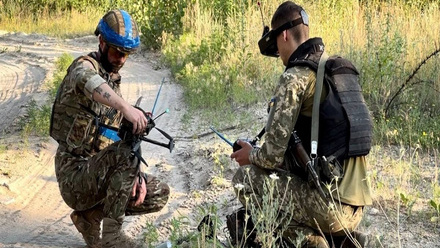
Another lesson in this area are aerial reconnaissance capabilities (Unmanned Aerial Vehicles – UAVs). They provide the commanders with a unique capability of the real time picture and, what is more important, with an opportunity to react immediately. UAVs provide full spectrum of data in all types of operations. We intend to introduce UAVs on a larger scale in order to provide the commanders not only with a tactical overview, but also with an opportunity to have a clear picture at the operational level. For the moment – with respect to UAVs - we mainly rely on equipment gained from other countries, but at the same time we work on our own designs. However,we have the intent to introduce UAVs on a larger scale, to include large UCAVs (Unmanned Combat Aerial Vehicles) for the Air Force.
Our experience in Afghanistan and Iraq shows the urgent requirement for the coordinated use of SIGINT (Signal Intelligence) in order to implement compatible devices which are able to work in the same system. We also see the need for creating a homogenous information circulation system within the theatre. It would improve coordination and effectiveness of common efforts.
Based on missions in Iraq and in Afghanistan we have come to the conclusion that the role of the special forces needs to be increased. Thus, following the establishment of Special Forces Command we gathered the already existing Special Operations Forces (SOF) units under this command and created independent service of the armed forces. This reorganisation will allow the SOF training enhancement and should make their missions more effective. The role of properly trained Joint Tactical Air Controllers (JTAC) or Forward Air Controllers (FAC) has risen significantly, since we deployed combat units to ISAF.
We execute training of forces planned to the mission. This is not an easy task to execute, because there are important differences in preparation and training of staffs and units. While staff training is relatively easy to be organised and its costs are comparatively low, unit training is rather more challenging to conduct and costs are considerable. Specialised training centres and infrastructure are also required to accommodate training of entire units. The most important type of training – staffs and units together – often cannot be sufficiently well conducted, because of a lack of and adequate mission conditions, like terrain and climate. Nevertheless, we put great effort to prepare our contingents to be as mission ready as possible.
Let me also stress that the professionalisation of the Polish military becomes a key element of the transformation process. In order to effectively face future security challenges and be able to use next generation technology on the future battlefield we see an urgent need for the transformation of the Polish Armed Forces manpower structure. Polish government intends to reach a 100% professional soldiers level by 2010. The majority of modern militaries go professional, and for crisis operations this is the preferred model of service. Another argument for the professional service is the high level of sophistication of the present and future weapon systems. If you have a soldier for nine months, you may train him only for basic functions. You have no time to teach him how to operate sophisticated armament and to handle it properly and effectively. Professionalisation is enforced by the complexity of the state of the art materiel and the requirements of the crisis operations.
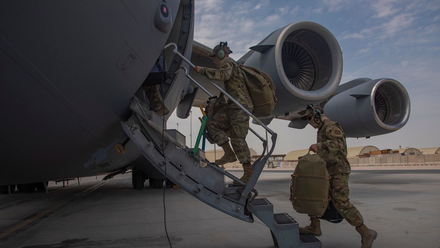
One of the crucial demands which still remains important, is the strategic transport capability. For this reason, Poland has been taking part in multinational programmes, such as the Strategic Airlift Interim Solution (SALIS) and NATO Strategic Airlift Capability (SAC). Poland is planning to acquire five Hercules C-130E transport aircraft and two Multi Role Transport-Tankers, while the issue of participating in the A-400 programme is being considered. Poland has also declared to join the Sealift Coordination Centre (SCC) and the Athens Multinational Sealift Coordination Centre (AMSCC) initiatives.
Coming down from the significant strategic changes, let me focus your attention on the mission oriented improvement of combat and support equipment. The HMMWV has become a very popular vehicle among our soldiers, especially those serving in Afghanistan. Yet, they needed to be upgraded to enhance the security of the troops. Therefore, we have added on short notice some armour, mounted machine gun weapon stations, tracking systems and various IED jammers to neutralise radio controlled IEDs. The systems have proved to be effective.
When planning our deployment to ISAF, we realised that the Polish contingent would need heavier vehicles in Afghanistan; we therefore decided to send 8x8 Rosomak Infantry Fighting Vehicles (IFV) equipped with a 30 mm canon and to have them up armoured and equipped with the NATO Force Tracking Systems (NFTS). So far the vehicles have proven to be IED resistant – no single soldier died in any incident that involved attacks on the Rosomaks. Actually, we have reports that the Taliban purposefully avoid our IFVs, because the observation out of the vehicle is very good and on a few occasions the Rosomak was wreaking serious havoc in their ranks.
Another issue is the composition and capabilities of engineering units. After some experiences we had to modify the structure and equipment to make them effective in quickly fortifying the bases and other military facilities. This activity is also crucial for the protection of our personnel in operations and provides a sheltered environment for recovering troops, exhausted from their patrolling. Remote controlled robots increasingly become a standard piece of equipment of our sappers.
Furthermore, the capability for quick reinforcement (QRT) or combat support in remote areas became a vital issue. Again, our experience shows that the commander needs to have at his disposal adequate force and transportation means. Therefore, we had to provide our contingents with additional combat and utility helicopters in order to meet this operational requirement. To sustain the QRT we have decided to buy more helicopters and to thoroughly modernise some of the already operational choppers. The helicopter upgrade is aimed at protecting the crews by lowering the vulnerability to hostile MANPADS, implementing an identification friend or foe (IFF) system, and equipping pilots with modern night vision devices. Additional ballistic protection was also provided as well as enhanced manoeuvrability and capability to fly the choppers under temperatures reaching up to 60 degrees Celsius. Pilot training has to be adapted as well. Equipment and personnel have to be operational during day and night, under all weather conditions and in mountainous terrain.
The soldier remains the centrepiece of our military formation. We focus on a lightweight, low observable, enhanced-armour protection, fighting ensemble for the individual Objective Force Soldier. The Polish future individual soldier system is known under the name TYTAN. The protection of the soldier is significantly enhanced by bullet proof jackets and suits. Whereas the head, arms and legs are protected against traditional small calibre weapons, the torso is shielded by advanced ceramic and aramid ballistic plates making it impenetrable against armour piercing munitions. A series of newly developed Kevlars is used by those soldiers currently deployed to operations. Depending on their branch assignments, specific Kevlars are issued. The resistance against small calibre weapons was also improved. The capability to see the opposing force at night became a critical capability that we recently started to intensely develop. By now every soldier and pilot performing combat or combat related missions has been equipped with some type of night vision devices. A new capability is to enable the soldier wearing a monocular to be simultaneously able to engage the enemy. The night vision head up display worn by helicopter pilots becomes critical when flying at low altitudes.
New small calibre weapon improvements include rails on the 5.56 mm Beryl rifle to add supplementary equipment such as infrared sights. The Land Forces have also requested heavy calibre sniper rifles to be developed. As a result we now have Polish built 7.62 mm Bor and 12.7 mm Tor sniper rifles produced in Tarnow.
Based on our experiences, particularly in Iraq we have created a CIMIC structure which may be applicable everywhere after the given mission specifics modification, such as culture, ethnic diversity and local conflicts, religion and economical standards.
As we speak on CIMIC role in the stabilisation and humanitarian operations it is necessary to mention the role of Psychological Operations that may play in achieving a mission’s success. Through the recent years we have identified the clear need for professionally prepared PSYOPS Teams deployed along with the operational units on the field. Both CIMIC and PSYOPS are the first ones to go in case of collateral damage as they are well prepared to speak directly to the local authorities.
The physical availability of the medical personnel among the troops has an extremely positive psychological impact. Access to the physician, or any medical personnel should be easy for the individual soldier. It is an important part of building confidence to the commander. All medical facility locations should be well known to the military personnel at any time. If possible, reach back facilities should be established in serious cases such as satellite teleconference. The operations in the remote areas, with the specific climate, social and economic conditions require the establishment of a force medical protection system (medical intelligence) in order to protect forces against unknown biological or chemical threats.
Finally, let me conclude that today’s operations become very multinational. I believe that it will be vital to have the capability to conduct multinational operations at the lowest command levels. Let me remind you that more than a decade ago it was a common opinion that multinationality at levels below the division was considered as unlikely. Today, we are already speaking of multinational battalions, companies, platoons, or even teams. As an example let me mention the Polish-Lithuanian-Ukrainian Battalion that operates in Kosovo.
Operations significantly accelerated Polish reforms. Nevertheless, transformation is a never-ending story. Continuous and gradual adaptation to the new reality is an ongoing process. Today we do believe that by 2020 we will have agile, more expeditionary, better equipped and interoperable armed forces able to easily "plug-in" to multinational and joint operations. We realise that it will not be easy and we will not be able to avoid making difficult decisions, but we are determined to succeed. We want to have a military which will meet our expectations and future challenges.